
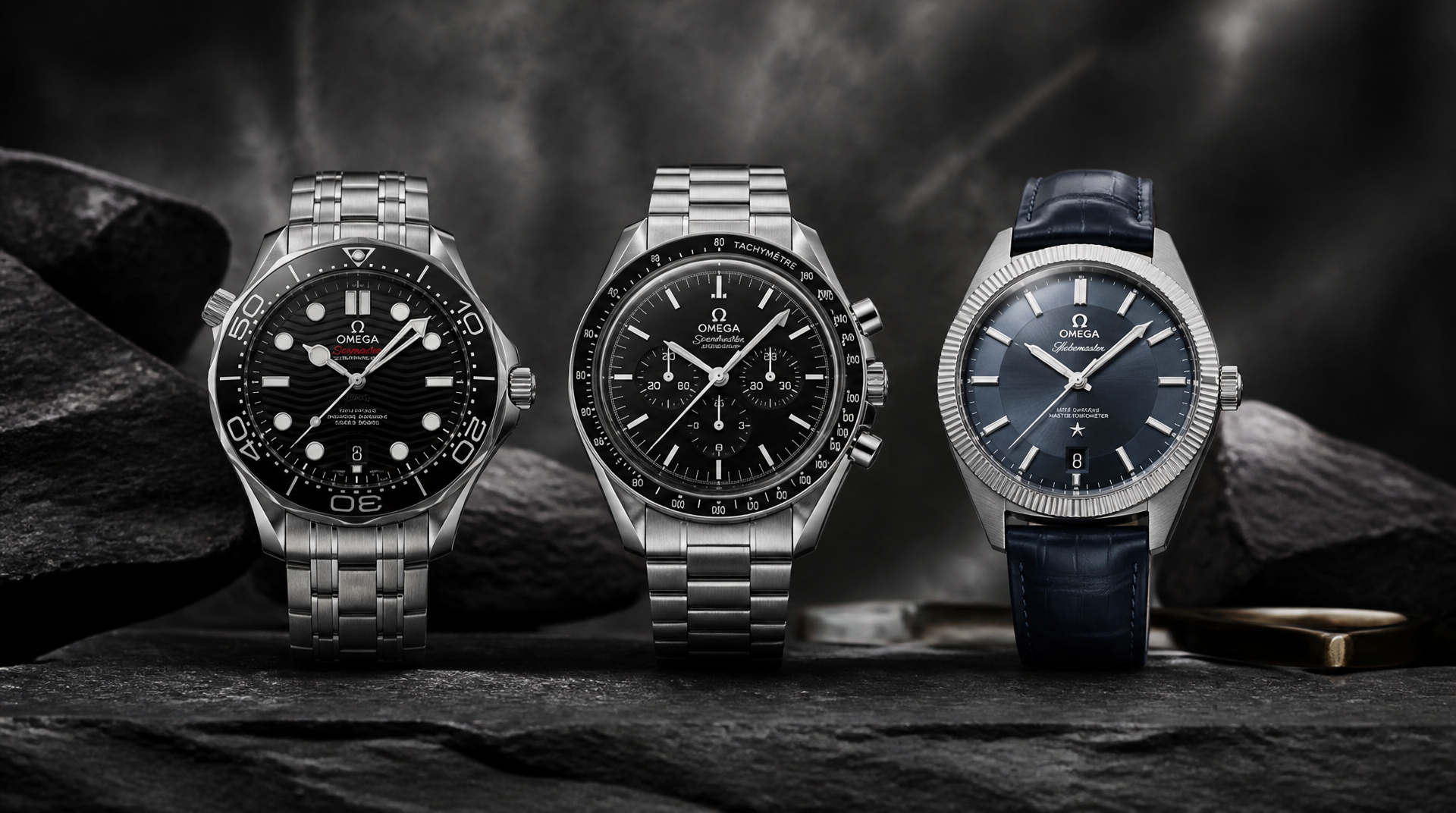
Omega’s lineup revolves around the Speedmaster moonwatch, the Seamaster dive family, and a capable everyday collection anchored by the Constellation and De Ville. You can chase a pre‑moon chronograph, wear a Master Chronometer automatic, or dress up easily—but the model that fits your wrist and habits matters more than heritage alone. This guide walks through the core references, the movements that power them, a maintenance routine that protects your purchase, and a buying roadmap that separates real value from hype.
Omega’s Pivotal Moments: From 1848 to the Modern Co‑Axial
Louis Brandt founded the company in La Chaux‑de‑Fonds in 1848, but the Omega name didn’t appear until 1894, when the 19‑ligne caliber set a new mass‑production precision standard. Omega became the official Olympic timekeeper in 1932—a role it still holds—and launched the Seamaster in 1948 as its first family of water‑resistant sports watches. In 1957 the Speedmaster debuted as a motorsport chronograph. Eight years later NASA certified it for manned space missions after it passed extreme thermal, shock, and vacuum tests that broke competing watches. A Speedmaster Professional was on Buzz Aldrin’s wrist during Apollo 11 in 1969.
The Seamaster’s pop‑culture arc began in 1995 when it appeared on James Bond’s wrist in GoldenEye. It now anchors a dive‑watch line that ranges from a 300 m ceramic‑dial diver to the 600 m Planet Ocean. Omega introduced the first commercial co‑axial escapement in 1999, and in 2015 the Master Chronometer certification—backed by METAS testing—raised the bar for anti‑magnetism, accuracy, and real‑world performance on the wrist, not just inside a movement holder.
The Core Collections
Speedmaster
The Moonwatch remains the anchor: a 42 mm manual‑wind chronograph with a tachymeter bezel and either a hesalite crystal (caliber 3861, reference 310.30.42.50.01.001) or a sapphire “sandwich” case that shows the movement. The 3861 Master Chronometer movement sits inside a case that spans barely 47 mm lug‑to‑lug and 13.2 mm thick, so it wears closer to a 40 mm watch on most wrists.
Beyond the Professional, Omega layers the Speedmaster ‘57 with a co‑axial automatic chronograph and a date, the bi‑compax Speedmaster 44.25 mm broad‑arrow variants, and the ceramic‑cased Dark Side of the Moon series. Vintage shoppers often target pre‑moon references like the 145.012 or the caliber‑321‑equipped 105.012, both of which carry a collector premium. A more accessible entry point is the 1990s 3590.50 with the 1861 movement, which trades around $3,000–$4,000—roughly half the cost of a new hesalite Moonwatch.
Seamaster
The Seamaster splits into three distinct tools. The Diver 300M (42 mm, reference 210.30.42.20.01.001) carries the Bond association, a wave‑pattern ceramic dial, a 10‑o’clock helium escape valve, and the automatic caliber 8800. Its lug‑to‑lug approaches 50 mm and the case thickness hits 13.7 mm; on wrists below 6.5 inches it can feel top‑heavy.
The Planet Ocean scales water resistance to 600 m and case diameters from 39.5 mm to 45.5 mm. The 39.5 mm reference 215.30.40.20.01.001 runs the 8800 and solves the size issue for smaller wrists that can’t manage the full‑size Diver 300M. The Aqua Terra skips the dive bezel entirely: 38 mm (reference 220.10.38.20.01.001) or 41 mm, 150 m water resistance, and the antimagnetic 8900 movement. It is arguably the most versatile daily‑wear Omega.
Constellation, De Ville, and the Quiet Achievers
The Constellation and De Ville sit outside the sports‑watch spotlight but use the same co‑axial calibers in thinner, dressier cases. The Constellation’s signature claws on the bezel and integrated bracelet give it a distinctive profile, while the De Ville lineup offers classic round‑case options that fly under the radar. The Railmaster is a no‑date antimagnetic field watch with straightforward legibility—a legitimate tool watch that doesn’t play for attention.
Speedmaster vs. Seamaster: The Real Tiebreaker Is Your Wrist
Many buyers lock onto the Speedmaster or Seamaster before considering fit. The single biggest decision factor is wrist circumference and how the watch sits during daily wear—not marketing legacy alone.
| Watch | Case Diameter | Lug‑to‑Lug | Thickness | Crystal | Wrist Size Sweet Spot |
|---|---|---|---|---|---|
| Speedmaster Professional (hesalite) | 42 mm | ~47 mm | 13.2 mm | Hesalite or sapphire option | 6.3 in and up |
| Seamaster Diver 300M | 42 mm | ~49.5 mm | 13.7 mm | Sapphire | 6.5 in and up |
Decision logic
- Choose the Speedmaster Professional if you want a chronograph with a slimmer profile, the option of a see‑through caseback, and the ritual of manual winding—and your wrist is under 6.5 inches.
- Choose the Seamaster Diver 300M if you need an automatic movement, a date window, and genuine dive‑ready water resistance, and your wrist is 6.5 inches or larger.
- If you need a dive watch on a smaller wrist, test the 39.5 mm Planet Ocean or the 38 mm Aqua Terra. The full‑size Diver 300M often fails the comfort test on that wrist range despite its spec‑sheet appeal.
Omega Movements and Certifications: What the Caliber Numbers Mean
Current‑generation Omega watches run in‑house co‑axial movements with silicon balance springs. The Master Chronometer standard (METAS, since 2015) guarantees the watch runs within 0/+5 seconds per day, resists magnetism to at least 15,000 gauss, and passes water‑resistance and power‑reserve tests with the movement cased.
The key calibers and where they appear:
- 3861 – Manual‑wind chronograph in the current Moonwatch; Master Chronometer, replaces the 1861.
- 8800 – Automatic, single‑barrel, hour‑hand quickset with date; found in the Diver 300M and the smaller Aqua Terra/Planet Ocean.
- 8900 – Automatic, dual‑barrel, independent hour‑hand adjustment without hacking seconds; powers the 41 mm Aqua Terra and larger Planet Ocean.
- 9900 – Automatic chronograph with column wheel and vertical clutch; used in the Speedmaster ‘57 and racing‑inspired Speedmaster variants.
Older models like the Speedmaster Reduced (caliber 3220) are not co‑axial and not Master Chronometer rated. They cost less upfront but typically require shorter service intervals.
How to Care for Your Omega Watch
Warning Signs That Mean Your Watch Needs Attention
- Daily timekeeping drifts beyond +5/‑0 seconds on a Master Chronometer model (track it over a week).
- Winding the crown feels gritty, loose, or meets sudden resistance.
- Condensation appears under the crystal—even if it clears later.
- The date change sticks mid‑cycle or shifts slowly.
- Any rattle that wasn’t there before, especially when the chronograph pushers are pressed.
Step‑by‑Step: Getting Service Right
1. Check your warranty status. New Omega watches bought from an authorized dealer carry a 5‑year warranty. If you are inside the window and the issue isn’t wear‑and‑tear, an Omega service center will usually cover the repair.
2. Decide on a full service or a targeted repair. Omega recommends a complete service every 5–7 years. A full service disassembles, cleans, lubricates, and replaces worn parts; the cost can run $700 or more depending on the movement. A targeted repair may not include a full pressure test, so if you rely on water resistance, insist that the service center includes a pressure‑test certificate with the invoice.
3. Choose a service path. Use Omega’s website to find a factory‑authorized service center. Third‑party watchmakers can handle older non‑co‑axial movements, but a Master Chronometer watch should go through an Omega‑approved facility to maintain the certification.
4. Send the watch with clear instructions. Include a note listing the symptoms you observed. Photograph the watch from multiple angles before shipping. Omega will return it with a service pouch and a test certificate.
5. After service, verify the result. Wear the watch for a few days and check timekeeping against a reference clock. A freshly serviced Master Chronometer movement should land inside +3/‑2 seconds per day in real‑world use.
After-Service Verification: How to Confirm the Fix Worked
Set the watch to a reliable source like time.gov at the same time each day for three days. A freshly serviced Master Chronometer movement should stay within +3/‑2 seconds per day; allow a brief settling period, but if it drifts outside +5/‑0 after four or five days, the regulation may be off. Contact the service center for an adjustment while the service warranty is active—most Omega service centers provide a 24‑month warranty on the work performed.
When to Stop Immediately—and What to Do Next
Some symptoms mean the watch should not be worn or wound further until a professional inspects it.
- The crown no longer screws down securely. Keep the watch away from water until repaired. A stripped crown tube will let moisture in quickly.
- The movement stops completely and won’t restart with winding or shaking. Forcing the crown or shaking it harder can damage the winding mechanism. Box it and take it in.
- You hear a loose rotor spinning freely or feel a “click” when tilting the case. This signals a damaged rotor bearing or a loose screw inside the movement. Continued use can cause deeper internal damage.
- Fog or moisture under the crystal after a recent service. Even if the watch was just overhauled, water vapor inside means the case seal has already failed. Do not try to dry it with rice or heat—corrosion starts in hours and can ruin the dial and movement. Stop wearing it and return it to the service center immediately; a factory‑authorized service warranty typically covers this type of failure for up to two years.
New, Pre-Owned, and Grey Market: Where Omega’s Value Sits
Authorized dealers and Omega boutiques provide a 5‑year factory warranty on Master Chronometer models and first access to limited editions. MSRP is the starting point, but you can often negotiate on watches that have been in the case for a while.
The pre‑owned market is where you find the strongest value and reference‑specific hunting. A like‑new current‑generation Seamaster Diver 300M can save 20–30 % off retail. For vintage Speedmasters, reference and movement are everything. A 145.012‑67 with a caliber 321 trades at a significant premium; if you want the Moonwatch look without the collector markup, a well‑kept 3590.50 with the 1861 movement delivers similar wrist presence for roughly half the cost. Always ask for service history—a co‑axial caliber that hasn’t been serviced in 7 years could be near the end of its dry interval, and a factory service bill is not trivial. Real‑world pricing trends can be checked on marketplace platforms like Bob’s Watches, where recent sale data makes the market transparent.
Grey‑market sellers offer brand‑new watches below AD pricing but without the Omega warranty, providing their own in‑house coverage instead. The upfront saving is tangible, but if a Master Chronometer watch needs warranty‑level repair, Omega will charge full price. Weigh that risk against the discount.
Frequently Asked Questions
What is the Omega Speedmaster Professional Moonwatch?
It is the manual‑wind chronograph that NASA qualified for manned space missions. The current reference 310.30.42.50.01.001 carries the caliber 3861 movement, a Hesalite crystal, and the same 42 mm asymmetrical case profile that has defined the model since the 1960s.
Is the Omega Seamaster suitable for diving?
Yes. The Diver 300M and Planet Ocean meet ISO 6425 dive‑watch standards, with a screw‑down crown, a unidirectional timing bezel, and a helium escape valve on most models. Gaskets degrade over time, so pressure‑test the watch at least once a year if you wear it in the water regularly, and before any dive trip if the watch is more than a year old.
What’s the actual difference between the Omega caliber 8800 and 8900?
The 8800 uses a single barrel and adjusts the hour hand in one‑hour jumps along with the date; it appears in the Diver 300M and the smaller Aqua Terra and Planet Ocean. The 8900 has dual barrels for a steadier torque curve and an independent hour‑hand setting that works without hacking the seconds hand—useful when you cross time zones frequently. Both are Master Chronometer certified.
Explore This Topic
- Back to Omega
- Back to Omega Brand Hub
Related guides in this cluster:
- Breitling Watches: The Complete Brand Guide — Navitimer, Superocean & More
- Christopher Ward Watches: Complete Brand Guide & Review
- Seiko Watches: The Complete Brand Guide — Models, Movements & What to Buy

The We Know Watches editorial team brings together over 40 years of combined watch collecting, trading, and repair experience. Our editors have owned and handled watches from every major brand — from entry-level Seiko 5s to Rolex, Omega, Patek Philippe, and independent Swiss watchmakers. We’ve bought and sold at auction, worked with authorized dealers, visited manufacturing facilities in Switzerland and Japan, and serviced hundreds of movements ranging from the Seiko 7S26 to the Longines L888. Every guide and review we publish is based on hands-on experience, original research, and consultation with professional watchmakers. We do not accept payment for reviews, and we clearly disclose when we use affiliate links.