
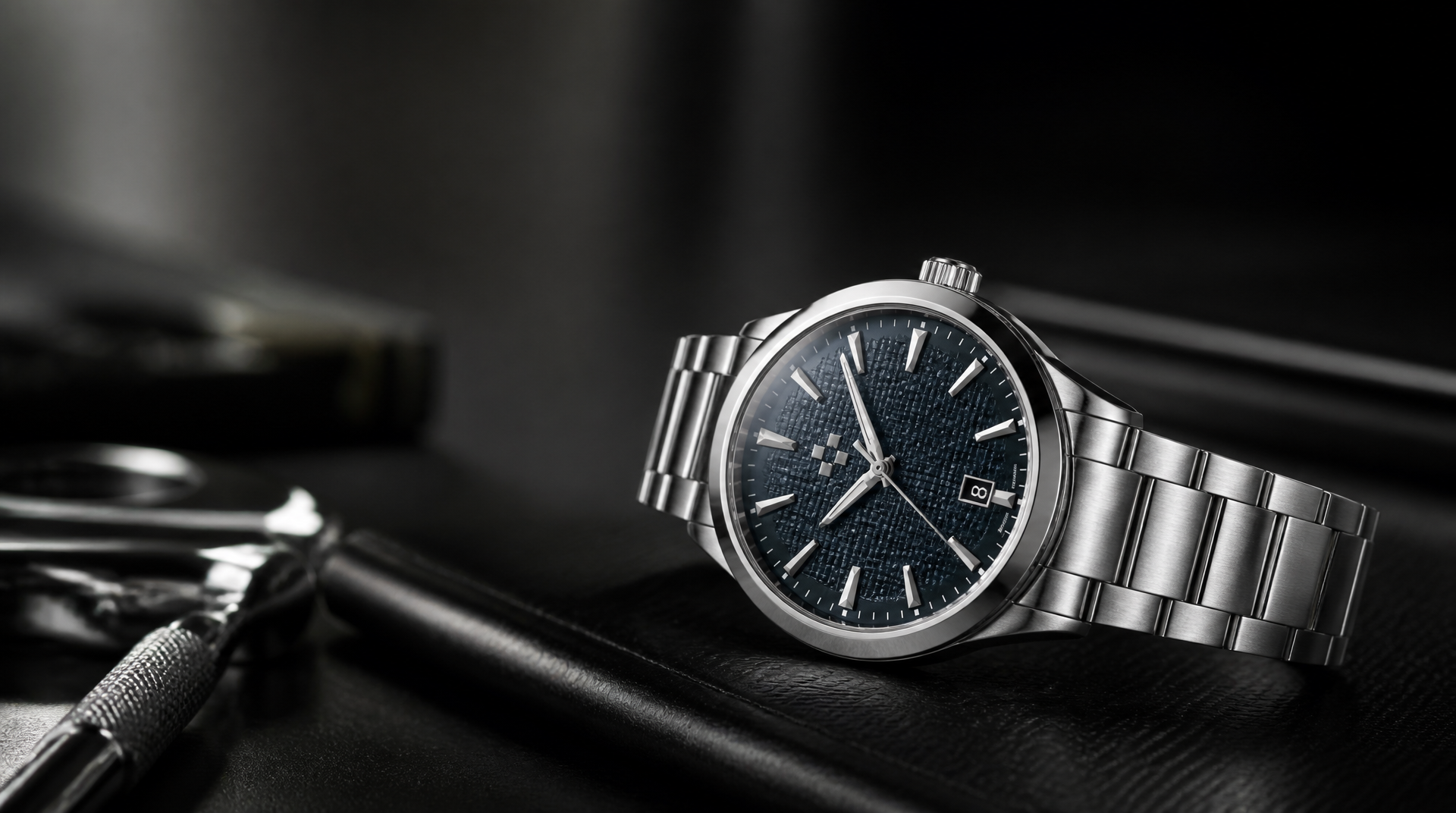
Christopher Ward fits the value-focused enthusiast who wants a Swiss automatic with strong finishing, honest specs, and a direct-to-consumer price that undercuts legacy mid-tier brands—not the buyer who needs instant brand recognition or a piece that will hold its value on the used market. If you want your next watch to announce itself to others the moment you walk into a room, skip Christopher Ward and look at a pre-owned Tudor Black Bay 36 or a Longines HydroConquest instead.
Who Christopher Ward Watches Are the Right Fit For (and the Trap That Catches Enthusiasts)
The core buyer who gets the most from Christopher Ward is the spec-driven enthusiast. These are people who care more about a regulated Sellita SW200 inside a well-executed case than about a logo’s social signaling, and who will notice the difference between a screw-link bracelet with dual-sided articulation and the stamped clasps found on many competitors at similar prices. For a C60 Trident Pro 300—ceramic bezel, 300m water resistance, on-the-fly micro-adjust—the price-to-spec ratio remains a compelling argument against spending more at retail for a less well-equipped watch.
A quieter fit is the collector who wants a modern daily wearer that slips under the radar. The designs often sit in a comfortable middle ground: contemporary enough to feel current, conservative enough to avoid unwanted attention. If you routinely research case thickness, lug-to-lug dimensions, and clasp refinement before pulling the trigger, you are exactly the person this brand was built for.
One failure mode surfaces repeatedly in online discussion and brief ownership cycles: confusing “value for money” with “investment value.” Detecting it early is simple. If you search for a Christopher Ward and simultaneously estimate what you could sell it for in two years, you will almost certainly be disappointed. Resale on CW watches tends to be far weaker than on entry-level Tudor, Longines, or even certain Grand Seiko quartz models because the direct-to-consumer price lacks the inflated MSRP that props up perceived retained worth. The early signal: if your interest is coupled with phrases like “holds its value” or “won’t lose much,” you are already in the wrong frame. Buy this watch because you plan to wear it heavily and keep it.
A practical boundary worth stating: This assessment centers on the brand’s automatic sports models—the C60 Trident, C63 Sealander, and C65 Aquitaine lines. The equation shifts noticeably for quartz chronographs, limited-run novelties such as the Bel Canto, or model lines built around different movements. If you are comparing a CW quartz field watch against a Hamilton Khaki Field Quartz, the resale and service-network critiques matter far less, and the design-originality critique doesn’t apply in the same way. Apply the advice in this guide selectively, not universally.
If after all of this you’re still persuaded that build quality and daily ownership satisfaction outweigh future resale and service convenience, your next step is practical: zero in on the specific model, dial color, and bracelet configuration that fits your daily wear, then verify that the lug-to-lug distance sits within a comfortable range for your wrist. CW cases, especially the Lightcatcher™-shaped C60 and C63, often wear larger than their diameter suggests; measure a watch you already own whose 48–49mm lug-to-lug feels right, and match that to the published specs before ordering. The generous return policy reduces some risk, but a three-minute measurement saves the disappointment of unboxing a watch that doesn’t sit correctly.
Main Trade-Offs
Christopher Ward has elevated its quality dramatically over the past decade, yet the direct-to-consumer model creates compromises that don’t appear on a spec sheet. The most immediate friction is physical access. With very limited showroom presence, most buyers purchase without handling the watch first. Case shapes can wear differently than photographs suggest, and bracelet comfort is something you’ll only verify once the box arrives. A mismatch that catches international buyers harder is warranty service: sending a watch back to the UK-based service center from North America or Asia means international shipping costs, potential customs complications, and unpredictable turnaround times—enough to turn a simple regulation issue into a multi-week headache that a local-service brand like Longines avoids entirely.
Another trade-off lives in the intangible space of identity. Many models draw clear inspiration from established icons—the C63 GMT has an obvious role model, and the C65 Aquitaine’s retro skin-diver styling won’t surprise anyone familiar with mid-century dive watches. The execution is usually good, but it often lacks the distinctiveness that makes a watch feel essential rather than merely well-made. Over time, a design that initially felt like smart value can start to feel replaceable. The financial profile demands the same clear-eyed acceptance: the low initial price is genuine, but so is the depressed resale. If you later crave a change, you’ll likely recover far less as a percentage of spend than with equivalent Longines, Sinn, or secondhand Tudor pieces.
How Christopher Ward Compares to Other Mid-Tier Options
| Brand (similar steel sports watch) | Typical Street Price (automatic) | Movement Base | Warranty | Resale Retention | Service Network |
|---|---|---|---|---|---|
| Christopher Ward (C60/C63/Sealander) | $1,000–$1,400 | Sellita SW200 / SW330, factory-regulated | 5 years | Low | Mail-in, UK-based |
| Longines (HydroConquest / Conquest) | $1,300–$1,800 | ETA-based, COSC on some | 5 years | Medium | Global AD/service centers |
| Oris (Aquis Date / Big Crown) | $1,800–$2,300 | Sellita-based, with in-house refinement | 2–3 years typical | Medium-High | Widespread AD network |
| Hamilton (Khaki Field Auto / Navy Scuba) | $600–$900 | ETA C07.611 (Powermatic 80) | 2 years | Medium | Swatch Group global service |
| Sinn (556 series) | $1,200–$1,500 | Sellita SW200 / SW300 | 2–3 years | Medium-High | Regional service partners |
The table highlights where Christopher Ward wins on initial spend and warranty length but loses on resale and in-person support. If the lowest price for a Swiss automatic with thoughtful case finishing and a genuinely good clasp is the criterion, CW is the clear choice. If easy service access and the ability to recoup more of your outlay later matter, Longines or Sinn start to look safer.
When to Skip Christopher Ward
Skip Christopher Ward if name recognition, heritage, and the feeling of wearing a brand with a long horological lineage are must-haves. A C63 Sealander will not carry the quiet confidence that a Longines or an Oris brings in rooms where these things are noticed, and the relative youth of the brand—founded in 2004—means the conversation never reaches the century-old stories that some collectors enjoy. If a meaningful part of your satisfaction comes from knowing the brand has unbroken multi-generational history, you’ll likely glance at the CW logo and feel a subtle lack that no spec sheet can fill.
You should also pass if you are the type of buyer who needs to compare multiple watches physically before committing. The online-only model works well for people comfortable making an educated guess from dimensions and photographs, but it leaves tactile shoppers wanting. The return policy mitigates financial risk, not the cycle of ordering, unboxing, and returning a piece that didn’t speak to you in person the way it did on a screen.
If strong resale value is a genuine priority—even within a budget that others wrongly call “affordable luxury”—Christopher Ward is not the right brand. Listings on enthusiast forums and secondary-market platforms consistently show steep depreciation relative to the original sale price. A cleaner alternative at roughly the same spend for someone who might sell after a year or two is a pre-owned Tudor Black Bay 36 or a clean second-hand Oris Divers Sixty-Five. Both hold their value noticeably better and remain liquid enough to sell without a fire-sale discount.
Design originality is another skip signal. If homage-driven aesthetics bother you, some of CW’s most popular models will grate over time. The sport and dive segments lean heavily on well-worn design languages, and while there are exceptions—the Bel Canto is genuinely novel—most core models give you excellent execution of familiar ideas, not a distinctive design point of view. For a more singular look around the same spend, a used Nomos Club or a Seiko SPB143 delivers a stronger sense of identity.
Bottom Line
Buy a Christopher Ward if tangible quality for the money is your top criterion and you intend to hold onto the watch for years. The brand has earned its place among informed enthusiasts who understand that a well-regulated Sellita movement inside a thoughtfully finished case with a sophisticated clasp can deliver an ownership experience that outpunches the price tag. Treat it as a long-term wearer, not a stepping stone to the next trade.
If you are still uncertain, apply a simple filter: remove resale entirely from the equation and ask whether the watch—on wrist, as a daily companion—would genuinely satisfy you for five years. If the answer is yes, Christopher Ward is an easy recommendation. If you’re already mentally budgeting for the next upgrade, you are better served by a pre-owned Tudor, a Longines, or an Oris that softens the financial blow when your tastes evolve.
Explore This Topic
- Back to Christopher Ward
- Back to Christopher Ward Brand Guide
Related guides in this cluster:
- Longines L888 Movement: Complete Caliber Guide & Specifications
- How Much Does Watch Service Cost? Complete Brand-by-Brand Breakdown
- Fossil Watch Battery Replacement: Complete Guide for All Models

The We Know Watches editorial team brings together over 40 years of combined watch collecting, trading, and repair experience. Our editors have owned and handled watches from every major brand — from entry-level Seiko 5s to Rolex, Omega, Patek Philippe, and independent Swiss watchmakers. We’ve bought and sold at auction, worked with authorized dealers, visited manufacturing facilities in Switzerland and Japan, and serviced hundreds of movements ranging from the Seiko 7S26 to the Longines L888. Every guide and review we publish is based on hands-on experience, original research, and consultation with professional watchmakers. We do not accept payment for reviews, and we clearly disclose when we use affiliate links.