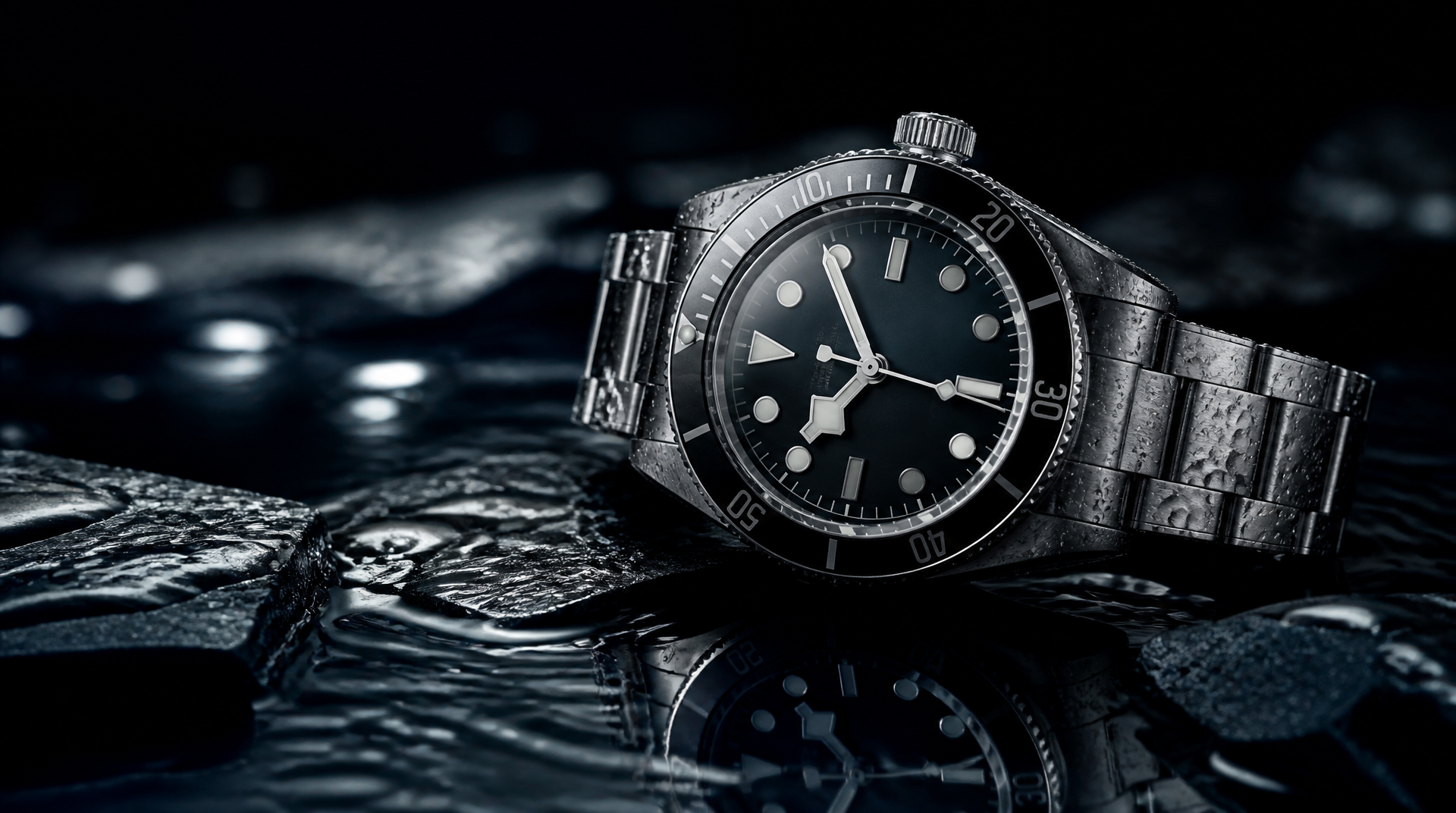
A watch marked 30m water resistant is safe only for splashes, rain, and handwashing—not swimming. 50m can handle a brief dip in a calm pool with the crown sealed, but no diving. 100m is the realistic entry point for regular swimming and snorkeling, and 200m is suitable for recreational scuba diving. Before you trust the number on the dial, do a 5-second check: make sure the crown is fully pushed in or screwed down, and if the watch hasn’t been pressure-tested in over 18 months, its seals are suspect.
What Depth Ratings Promise (and What They Don’t)
The depth rating is a laboratory static-pressure figure, not a dive-depth guarantee. Water is applied evenly and slowly in a chamber. In real use, a cannonball, a racing dive, or even an abrupt turn while swimming creates dynamic pressure spikes that can far exceed the static number. Manufacturers express resistance in meters, feet, bar (1 bar ≈ 10m), or ATM (atmospheres). 1 ATM equals roughly the pressure at the surface, so a 3 ATM (30m) watch can handle only light surface moisture.
30m / 3 ATM (100 ft): Splash-Proof, Not Swim-Proof
These watches resist handwashing, rain, and sweat only. Sustained submersion—even a shallow bath—lets water reach the movement. The crown and caseback seals are minimal, and vulnerability to soap and temperature swings is high. If you accidentally submerge a 30m watch, remove it immediately, dry it thoroughly, and have it checked by a watchmaker even if you see no visible fog. Do not swim, shower, or wear it during water sports.
50m / 5 ATM (165 ft): Light Swimming, With Caution
A 50m-rated watch can survive a quick, calm pool swim with the crown fully sealed. It is not built for diving, jumping, or high-speed water impact. Showering with it is a gamble: heat and steam soften gaskets and can force moisture inside. Rinse with fresh water after saltwater or chlorinated exposure, and never operate the crown or pushers while wet. If you wear a 50m watch in water regularly, plan on a pressure test every 12 months.
100m / 10 ATM (330 ft): Swimming and Snorkeling
This is the first rating most manufacturers consider genuinely swim-ready. You can lap swim, snorkel at the surface, and wear it in the rain without worry—provided the crown is screwed down and the seals are fresh. Salt water and chlorine still accelerate seal wear, so a fresh-water rinse after each exposure is wise. Avoid high-velocity activities like water skiing or cliff jumping, and skip hot tubs entirely: rapid temperature swings create internal condensation even when the seals are still intact.
200m / 20 ATM (660 ft) and Beyond: Diving-Ready
A watch marked 200m is generally safe for recreational scuba diving, especially if it meets ISO 6425 or equivalent standards. These models use thicker crystals, deeper-threaded screw-down crowns, and robust gaskets. If you plan to dive beyond recreational depths, or in helium-rich environments (saturation diving), look for a professional diver’s model with a helium escape valve and a rating of 300m or more. Even a diver’s watch needs annual pressure testing to stay trustworthy.
At-a-Glance: What Each Rating Can Handle
| Rating | Safe For | Avoid | Notes |
|---|---|---|---|
| 30m / 3 ATM | Handwashing, rain, sweat | Swimming, showering, submersion | Crown must be flush; seal often minimal |
| 50m / 5 ATM | Brief pool dip, surface contact | Diving, jumping, hot tubs, long soaks | Rinse after salt/chlorine; check crown before use |
| 100m / 10 ATM | Swimming, snorkeling, water sports | Scuba diving, high-velocity impact | Test seals annually if worn in water often |
| 200m / 20 ATM | Recreational scuba, snorkeling, all surface water | Saturation diving unless specifically certified | Look for ISO 6425 / “Diver’s” marking; test yearly |
The Silent Failure: A Quiet Leak That Ruins Movements
Water resistance rarely fails suddenly. It degrades quietly as gaskets stiffen, crack, or shrink. The crown gasket is the most common point of failure—it can look fine externally but no longer create a tight seal under dynamic pressure.
Two early signs often go unnoticed. First, a screw-down crown that spins with noticeably less resistance than before. That subtle ease usually means the internal o-ring is worn. Second, a faint musty smell when you unscrew the crown—a sign moisture has already entered the case and started slow corrosion. Later-stage signs are easier to spot: fog or tiny droplets under the crystal, or a haze that appears when the watch moves from a warm room to a cooler one. Even if the dial looks clear, a tiny leak can let moisture in slowly, causing rust weeks later. If you notice any condensation, stop wearing the watch near water and have it opened, dried, and re-sealed immediately.
Before You Assume It’s Swim-Ready: Prepare to Check
You need only a few things on hand:
- Good light—natural daylight or a bright desk lamp.
- A clean, dry microfiber cloth to wipe the case and crystal.
- Optional: a loupe or magnifying glass (your phone’s camera zoom works in a pinch).
- Knowledge of when the watch was last pressure-tested. If you don’t know, assume it’s overdue.
How to Check Your Watch’s Water Resistance (Step by Step)
Run through this sequence before you take any watch into the water.
1. Inspect the crystal and case. Wipe the crystal clean and check for nicks, hairline cracks, or chips along the edge where it meets the case. Look at the caseback seam under strong light—any gap, even a tiny one, can break the seal.
2. Test the crown and pushers. Pull the crown out to the winding position, then push it back firmly. If it’s a screw-down, tighten it until it stops with a snug feel. Now pay attention to what you feel. If the crown won’t screw down fully, feels gritty before seating, or locks with less resistance than you remember, the seal is compromised. In that case, do not expose the watch to water. Set it aside and move to the “When to Stop and See a Watchmaker” section below. If it locks securely, check any chronograph pushers—they must be screwed down or locked closed.
3. Check the service age. If your watch hasn’t had a pressure test in 18–24 months (12 months if it’s used in water regularly), the gaskets are suspect. Heat, humidity, soaps, and exposure to salt or chlorine all accelerate aging. This step alone should decide your next move: if the watch is overdue, skip any water activities until a professional test.
4. Get a professional pressure test. A watchmaker’s pressure test—wet or dry—applies controlled pressure and detects the tiniest leak. This is the only conclusive verification. If you’re planning a vacation, schedule the test at least two weeks ahead so there’s time to replace seals if needed.
When to Stop and See a Watchmaker
Stop self-checks and take the watch to a professional in any of these situations:
- You see fog, droplets, or a persistent haze under the crystal.
- The crown feels loose, gritty, or stops short of its normal seated position.
- The crystal appears to be lifting from the case, even slightly.
- Water has entered the case after a splash or rain (you may hear a faint slosh when you move the watch).
- The watch has been submerged beyond its rating, even if it’s still running—internal corrosion can begin without visible signs.
If the watch is under warranty, contact the brand or authorized service center before you let anyone open the case; an unauthorized opening can void coverage.
After a Successful Pressure Test: What You Can Count On
A watch that passes a professional pressure test with fresh gaskets can be used confidently up to its rated depth for the activity it’s designed to handle. You’ll get a cleaned, re-sealed case and a reference of when the next annual check is due. Mark the test date or save the watchmaker’s receipt. If you stick to an annual testing rhythm and always lock the crown before any water contact, you protect both the movement and the long-term condition of your watch.
FAQ
Can I shower with a 100m watch?
Even with a 100m rating, hot water, steam, and soap can degrade seals and force moisture past the gaskets, so most brands recommend removing your watch before showering.
Can I swim in the ocean with a 50m watch?
You can, but salt water accelerates seal wear and corrodes moving parts; if you do, rinse the watch in fresh water immediately afterward and avoid operating the crown until it’s dry.
How often should I have my watch pressure-tested?
For a watch used in water regularly, a pressure test every 12 to 24 months is a sensible rhythm; for a watch that only sees occasional splashes, test it before any planned water exposure.
What does ISO 6425 actually require?
ISO 6425 certification guarantees that the watch was over-tested (125% of its stated rating), includes anti-magnetic and shock-resistance requirements, and marks the watch as a diver’s model with legible underwater markings.
Can a rapid temperature change really let water in even if the seals are fine?
Yes, rapid shifts—like jumping into a cold pool from a hot deck, or entering a hot tub—can cause the air inside the case to contract quickly enough to draw moisture past gaskets that are otherwise intact, which is why divers and manufacturers both advise against hot tubs and sudden temperature swings.
With fresh seals and a crown that locks securely, your water-resistant watch is a companion for swimming, snorkeling, and diving—right up until its next scheduled pressure test.
Explore This Topic
- Back to General
- Back to Water Resistance
Related guides in this cluster:
- Watch Size Guide: How to Choose the Right Case Diameter, Thickness & Fit
- Automatic vs Quartz vs Manual: Watch Movements Explained for Beginners
- How Much Does Watch Service Cost? Complete Brand-by-Brand Breakdown

The We Know Watches editorial team brings together over 40 years of combined watch collecting, trading, and repair experience. Our editors have owned and handled watches from every major brand — from entry-level Seiko 5s to Rolex, Omega, Patek Philippe, and independent Swiss watchmakers. We’ve bought and sold at auction, worked with authorized dealers, visited manufacturing facilities in Switzerland and Japan, and serviced hundreds of movements ranging from the Seiko 7S26 to the Longines L888. Every guide and review we publish is based on hands-on experience, original research, and consultation with professional watchmakers. We do not accept payment for reviews, and we clearly disclose when we use affiliate links.