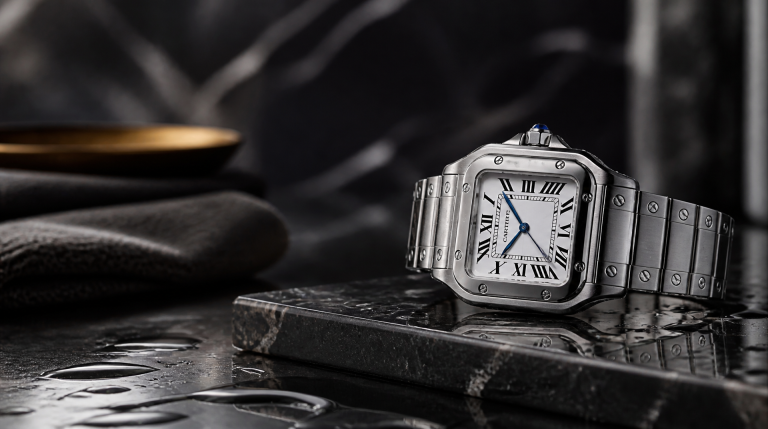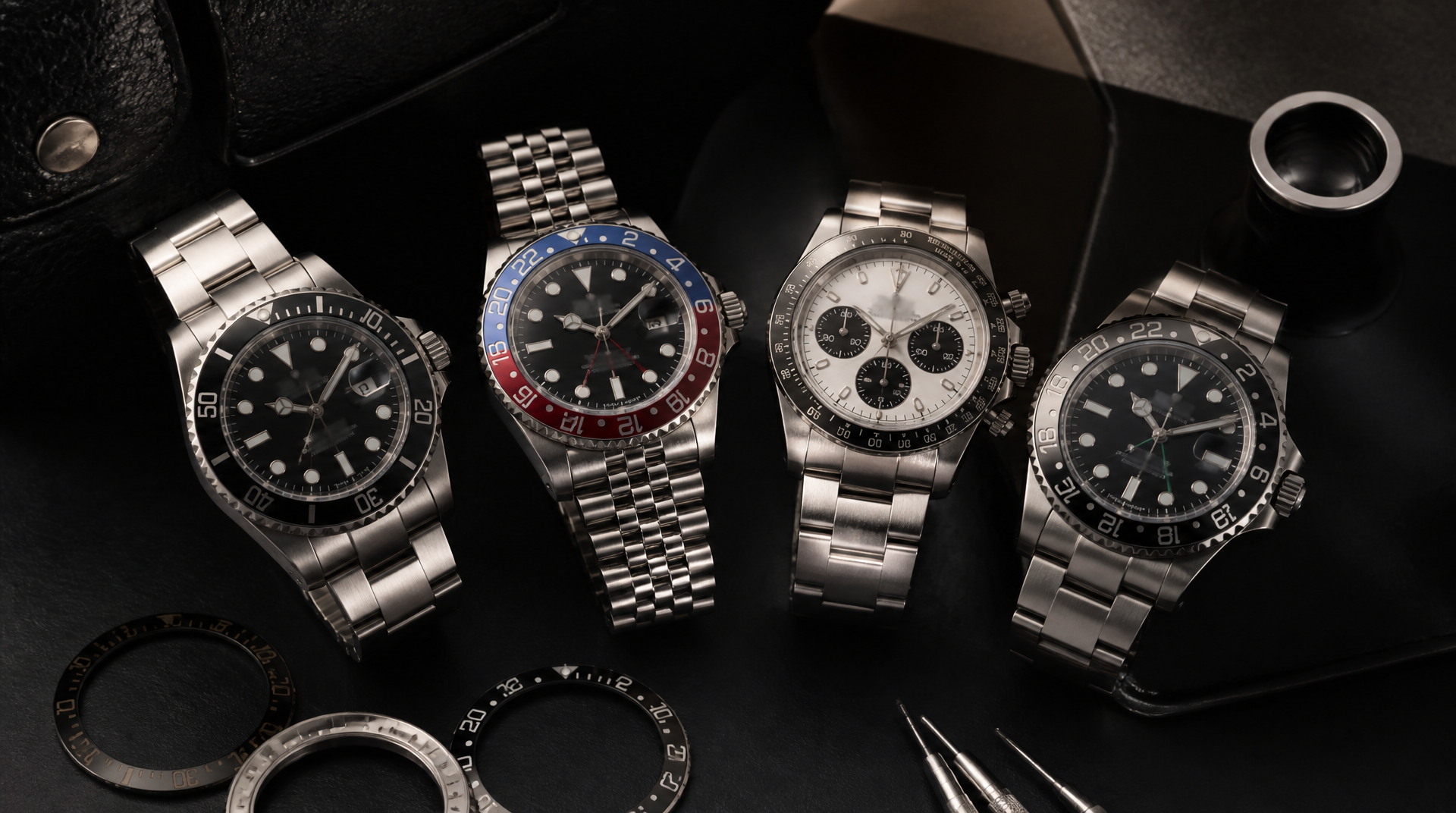
A watch bezel converts the ring around the dial into a timer, a second-time-zone tracker, or a speed calculator. The three types you will see most often—dive, GMT, and tachymeter—each work through a specific rotation and scale system. This guide shows exactly how to set and use them, how to avoid common reading errors, and when to hand the job to a watchmaker.
| Bezel Type | Primary Function | Rotation & Direction | Typical Scale | Example Watch |
|---|---|---|---|---|
| Dive | Elapsed time (safety stop, dive duration) | Unidirectional (counter-clockwise only) | 0–60 minutes, often first 15 min highlighted | Rolex Submariner, Seiko SKX007 |
| GMT | Second (or third) time zone | Bidirectional, usually 24-click | 24-hour ring | Rolex GMT-Master II, Tudor Black Bay GMT |
| Tachymeter | Speed over a fixed distance | Fixed (does not rotate) | Logarithmic scale (units per hour) | Omega Speedmaster Professional |
Before you turn the bezel: quick checks for every type
A 10‑second inspection removes the most common causes of misreadings later.
- Dive bezel: Confirm it turns only counter‑clockwise. Attempt a gentle clockwise twist. If the bezel moves at all in that direction, the unidirectional ratchet is compromised—never depend on it for dive timing.
- GMT bezel: Rotate through a few clicks in both directions. The clicks should feel crisp and evenly spaced. Any grinding or sloppy movement points to debris under the ring.
- Tachymeter bezel: Verify the printed scale is complete and the insert sits flush against the case. A lifted edge will snag clothing and can shift the alignment of the fixed markings.
If the bezel feels sticky, rinse the watch under lukewarm fresh water while turning the bezel gently; dry salt or dust is often the culprit. If stickiness persists, move to the troubleshooting section.
Use a dive bezel: step-by-step timing for dives
A dive bezel measures elapsed time by lining up the zero marker with the minute hand. Because it only turns counter‑clockwise, an accidental bump can only shorten the displayed time—never overstate it.
1. Set before entering the water. Turn the bezel counter‑clockwise until the inverted triangle or lumed pip points directly to the tip of the minute hand. That moment becomes your “zero.”
2. Read minutes directly. As time passes, note where the minute hand falls on the bezel scale. If the hand reaches the 20‑minute mark, you have been underwater 20 minutes.
3. Compare against your plan. Check the elapsed time against your no‑decompression limits or bottom time. If you are using a backup timer, cross‑check after the safety stop.
Early checkpoint: After setting, try to rotate the bezel clockwise. It must lock solid. If it moves, even a fraction of a minute, the ratchet spring or gasket is damaged. Stop relying on it for gas planning and have it serviced before the next dive.
Verify after the dive: Rinse the bezel with fresh water and turn it a few clicks. It should feel smooth in one direction only. If sand or grit remains trapped, you will feel it—clean it before the next use.
Use a GMT bezel: track a second time zone in seconds
A true GMT watch pairs a 24‑hour hand (one full rotation per day) with a 24‑hour bezel. The main hour hand can be jumped independently to local time while the 24‑hour hand stays on home time.
1. Set the 24‑hour hand to home time. If it is 14:00 (2 PM) at home, place the 24‑hour hand at the 14 mark on the bezel. On a Rolex GMT‑Master II, unscrew the crown, pull to position‑2, and set the 24‑hour hand to the correct hour.
2. Jump the main hour hand to local time. Pull the crown to the next position (date‑setting) and move the hour hand in one‑hour increments without affecting the 24‑hour hand or minutes.
3. Read home time directly from the 24‑hour hand against the bezel. Local time is read normally from the main hands. To track a third zone, rotate the bezel so the hour offset (e.g., +10 for Sydney) aligns with the 12‑hour marker, then read Sydney time via the 24‑hour hand.
Checkpoint: After traveling, compare the 24‑hour hand’s position against a phone’s world clock. A half‑click misalignment in a 24‑click bezel can shift the reading by an hour. If the bezel moved in your bag, simply realign it.
Use a tachymeter bezel: measure speed with a chronograph
A tachymeter scale (fixed bezel or chapter ring) calculates units per hour—typically miles per hour or kilometers per hour—by timing how long it takes to cover a known distance.
1. Start the chronograph the instant you pass a mile marker or any precisely measured 1‑mile point.
2. Stop the chronograph the moment you reach the next marker.
3. Read the scale where the seconds hand stops. If the hand points to 120 on an Omega Speedmaster after exactly one mile, your average speed is 120 mph.
4. The scale works best for events lasting 7 to 60 seconds. Outside that range accuracy fades quickly.
Checkpoint: When the seconds hand lands between two printed numbers, use the closer marking. For highway speeds, pre‑measure a ¼‑mile segment, time it, and multiply the scale reading by four. Test the setup at a steady known speed before relying on it for competitive timing.
How to pick the right bezel for your real risk
One decision criterion changes the recommendation depending on what happens when the bezel moves accidentally.
- If underestimating time is dangerous (diving, administering medication, cooking a sensitive recipe), you need a unidirectional dive bezel. A bidirectional GMT bezel or a fixed tachymeter offers no built‑in safety margin; a knock can silently add minutes.
- If you change time zones frequently, a GMT bezel with an independent 24‑hour hand removes mental arithmetic. A fixed 24‑hour bezel on a three‑hand watch can still track a second zone, but it is slower to read and cannot follow a third zone without extra adjustment.
- If you measure speed or production units on the fly, a tachymeter is the right tool, but it is useless for elapsed time or time‑zone tracking. Many chronographs combine a tachymeter with a separate timing bezel; choose the combination that matches your primary activity.
When a timing error could be life‑critical, lead with a dive bezel. For everything else, the GMT or tachymeter integrates into a daily‑wear watch without a safety penalty.
Common mistakes that throw off your bezel readings
Mistake 1: Aligning the dive bezel to the hour hand instead of the minute hand
Why it matters: The scale reads minutes elapsed, not hours. Lining up the triangle with the hour hand produces a nonsense reading.
Fix: Always set the inverted triangle to the tip of the minute hand, not the hour hand. Double‑check that you are reading the minute hand against the bezel scale.
Mistake 2: Letting the GMT bezel shift after setting
Why it matters: A bumped bidirectional bezel can offset the home time reading by an hour or more.
Fix: Make it a habit to reset the bezel alignment whenever you check the date. Compare the 24‑hour hand against a known time source after removing the watch from a bag or jacket.
Mistake 3: Using a tachymeter with an incorrect distance
Why it matters: The logarithmic scale is highly sensitive to distance. Timing between two tenths of a mile instead of a full mile produces a large speed error.
Fix: Pre‑measure the exact distance with a vehicle odometer or marked track. If you only have a ¼‑mile stretch, multiply the scale reading by four and confirm the result at a known constant speed.
Troubleshooting: what to do when your bezel jams, sticks, or won’t turn
Dive bezel jammed or turns roughly
Why it happens: Salt, sand, or dried skin debris wedge between the bezel and case; the retaining spring may be corroded.
Fix: Rinse under lukewarm fresh water while turning the bezel gently. If it remains stuck after a minute of rinsing, stop—prying can crack the insert.
After the fix: The bezel should click smoothly in one direction only. If it still binds or moves clockwise, get the click spring and gasket serviced.
GMT bezel shows the wrong time after travel
Why it happens: The bezel rotated accidentally in transit.
Fix: Realign the bezel using a phone’s world clock as a reference.
After the fix: Verify the 24‑hour hand reads correctly against the zero position. Any grinding during adjustment suggests debris—clean or service.
Tachymeter reading is way off
Why it happens: The measured distance was shorter than expected, or the chronograph was started too early/late.
Fix: Re‑measure the distance and test at a steady speed. If the chronograph seconds hand jumps or hesitates, the movement may need service.
After the fix: Run the chronograph for 60 seconds and stop; the seconds hand must point exactly to 60. If it lands elsewhere, have a watchmaker check the hand alignment.
Bezel clicks feel sticky or gritty
Why it happens: Leftover adhesive from protective film or dried lubricant on the click mechanism.
Fix: Clean with a soft toothbrush, mild soap, and water, then rinse thoroughly.
After the fix: Consistent resistance and audible clicks should return. If the gritty feeling persists, a professional cleaning and spring replacement is needed.
Zero marker won’t align with 12 o’clock
Why it happens: The bezel insert has shifted after an impact, or the retaining ring is bent.
Fix: Some aluminum inserts can be reseated with light, even pressure, but ceramic inserts are brittle—never flex them. A bent ring requires case‑back removal and bezel disassembly.
After the fix: The triangle or pip must sit exactly at 12 o’clock. If it is off by even a millimeter, have a professional realign it.
When to stop and go to a pro
If any home fix does not resolve the problem, stop and take the watch to a certified service center. Forcing a stuck bezel can crack a ceramic insert ($200+ to replace), bend the retaining ring, or damage the crystal. A standard bezel cleaning and gasket replacement typically runs $50–$150; a cracked ceramic insert easily costs more than that repair. For watches still under warranty, contact the manufacturer rather than opening the case yourself.
Frequently asked questions
Do all dive watches have rotating bezels?
Most do, but some hybrid or digital dive watches use a pusher‑operated internal bezel or a digital timer. An internal bezel is safe if it is unidirectional, but it is slower to operate with wet gloves and harder to read in murky water.
Can I use a tachymeter on a non‑chronograph watch?
No. A tachymeter requires a seconds hand that can be started, stopped, and reset independently. A standard running seconds hand cannot be controlled for precise start/stop timing, so the scale becomes decorative.
How do I tell if my GMT bezel is 24‑click or 48‑click?
Rotate the bezel slowly and count the distinct clicks per full turn. A 24‑click bezel tracks one‑hour increments; a 48‑click bezel allows finer adjustment in half‑hour steps. Both work, but 24 clicks are more common in modern GMT watches from brands like Tudor and Rolex.
Why do some dive bezels have a lumed pip at the 12 o’clock position?
The luminescent dot lets you read the zero mark in dark water without a flashlight. If the pip will not glow after a few minutes in bright light, the luminous material has likely degraded and can be refreshed by a watchmaker.
Can I replace a scratched bezel insert myself?
You can, but the risk of bending the insert or the thin retaining ring is high. If the watch has a ceramic insert, any flex during removal will crack it. It is almost always safer and cheaper to let a service center replace it in minutes than to buy a new insert after a DIY attempt fails.
Explore This Topic
- Back to General
- Back to Bezel Types
Related guides in this cluster:
- Why Your Automatic Watch Keeps Stopping: Complete Troubleshooting Guide
- How Often Should You Service a Watch? Complete Service Interval Guide by Brand
- Leather Watch Strap Guide: Types, Quality Grades & How to Care for Them

The We Know Watches editorial team brings together over 40 years of combined watch collecting, trading, and repair experience. Our editors have owned and handled watches from every major brand — from entry-level Seiko 5s to Rolex, Omega, Patek Philippe, and independent Swiss watchmakers. We’ve bought and sold at auction, worked with authorized dealers, visited manufacturing facilities in Switzerland and Japan, and serviced hundreds of movements ranging from the Seiko 7S26 to the Longines L888. Every guide and review we publish is based on hands-on experience, original research, and consultation with professional watchmakers. We do not accept payment for reviews, and we clearly disclose when we use affiliate links.