
Quick-Release Watch Straps: What They Are, Best Options & How to Install
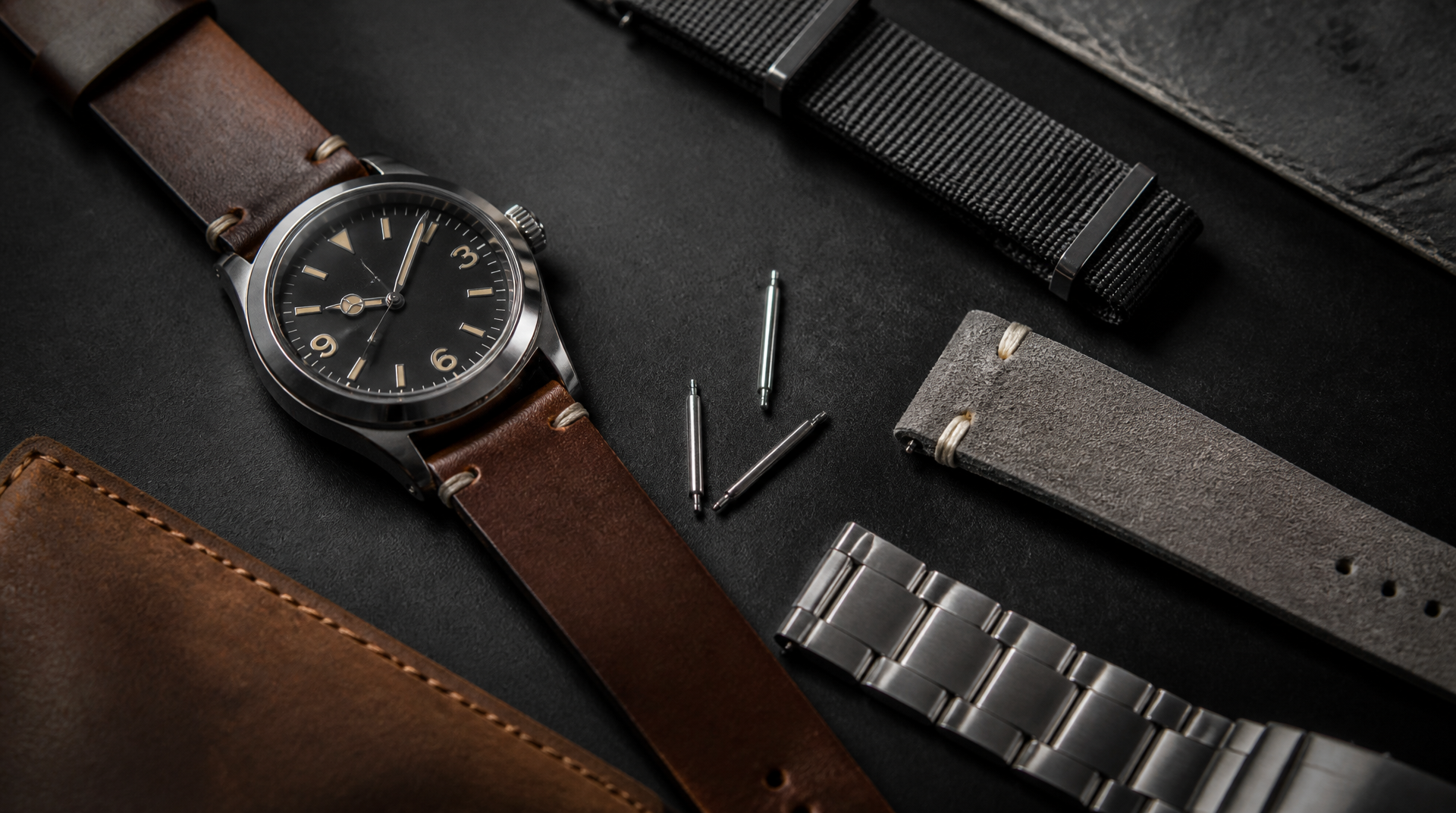
Quick-release watch straps let you swap bands in under a minute without a spring bar tool. A small metal lever built into the spring bar retracts one tip so you can remove or attach a strap with just your fingers—no forked tool, no pinched fingertips, no scratched lugs. This guide covers how the mechanism works, which straps deliver reliable hardware, a full tool-free installation sequence, and exactly what to do when the lever binds before it ever touches your watch.
How the quick-release mechanism works
A quick-release strap replaces a standard spring bar with one that has a tiny metal lever on its underside. Pull that lever toward the center of the strap, and the spring compresses while the tip on that side retracts into the bar. The opposite tip stays rigid and acts as a pivot. Once the retracted side clears the lug hole, the whole bar lifts free.
This design eliminates the main frustration of traditional strap changes: lining up a forked tool, catching a tiny spring bar shoulder, and compressing it without slipping. The lever does the compressing, so an entire swap—removing one strap and fitting another—takes well under a minute with bare hands.
The small moving part introduces one failure point: the lever channel can bind if the machining is rough, and weak springs may let the bar collapse under tension. The first test for any new strap is pulling the lever; it should slide smoothly and retract the tip completely before the knob bottoms out.
Best quick-release straps by material and use
Instead of browsing endless listings, match your use case to one of the material types below. All are sold with genuine quick-release spring bars and fit standard lug widths (16mm, 18mm, 20mm, 22mm, 24mm). The table gives representative options; use it as a starting point.
| Strap type / option | Material | Typical price | Best for |
|---|---|---|---|
| Barton Elite Silicone | Textured silicone | $20–$30 | Gym, swimming, all-day comfort on sports watches |
| Archer Quick-Release Leather | Genuine leather | $15–$25 | First leather swap, casual office wear |
| StrapsCo Canvas Quick-Release | Canvas with leather lining | $25–$35 | Field and military-inspired looks on a budget |
| Benchmark Suit Strap | Full-grain leather (quick-release option) | $50–$80 | Dress watches where leather quality matters most |
| Crown & Buckle two-piece nylon | Woven nylon with quick-release bars | $15–$35 | Hot weather; lightweight color variety |
How to narrow down the choice
- Leather varies hugely in finish and longevity. Full-grain options (like the Benchmark Suit Strap) age better and develop character but cost more. Genuine-leather straps at the entry level are softer out of the box and perfectly fine for occasional wear.
- Silicone and rubber handle water and sweat, though cheap silicone attracts dust. Textured models (like the Barton Elite) resist lint far better and feel less sticky on the skin.
- Canvas and nylon breathe well and suit field watches or summer beaters—they read more casual than leather.
- Heavy steel watches (dive watches, thick chronographs) put more lateral stress on spring bars. If you wear a head-heavy watch, look for straps that explicitly list reinforced quick-release bars with 1.8mm or 2.0mm diameter tips. A thin bar can collapse and let the strap pop free.
Fit and hardware checks before you order
The most common disappointment isn't the look—it's a strap that doesn't fit or won't stay locked. Run these two checks before the strap goes near your watch.
- Measure the lug width; never assume. Use a small ruler or digital caliper to measure the distance between the lugs on the inside. The existing strap often has the width printed on the back near the spring bar, but aftermarket straps may have worn marks. A 20mm strap forced onto 19mm lugs will pinch, create excess play, and stress the spring bar unevenly—don't make it fit.
- Test the lever action out of the box. Pull the quick-release knob back and release it several times. The lever should move freely without grinding, and the spring bar tip must retract completely before the knob touches the strap body. If the lever feels gritty or only retracts the tip partway, exchange it immediately. A sticky lever installed on the watch can jam inside the lug and turn a simple strap change into a repair job.
If your watch has prominent crown guards (Seiko SKX, many G-Shocks, some Citizen divers), check that you can comfortably reach the quick-release knob. Straps with a slightly longer or more exposed lever tab make one-handed changes feasible when the guard sits close.
How to install a quick-release strap without tools
This sequence takes about 30–60 seconds per side once you’ve done it a couple of times.
Preparation
- Work on a soft cloth or mat to protect the crystal and case.
- Confirm the strap’s lug width matches the watch exactly (see checks above).
- Inspect the quick-release lever motion and both spring bar tips: they should be straight and free of visible corrosion.
Steps
- Hold the case back up. Position the strap so the quick-release lever is on the underside and the buckle or tail faces the correct direction for your wrist. 2. Pull the lever toward the center of the strap with your thumb or fingernail. You’ll feel spring pressure and see one tip retract. Keep the lever pulled in. 3. Seat the fixed tip first. While holding the lever, insert the non-moving spring bar tip into the far-side lug hole.
That tip acts as the pivot. 4. Lower the bar into place. Gently lower the near side of the spring bar toward the vacant lug hole. The retracted tip should align with the hole without scraping the case. 5. Release the lever. Let the knob slide back. The spring-loaded tip will snap into the lug hole. Give the strap a light tug to confirm both tips are seated. 6. Repeat for the second piece of the strap.
Success check
The strap should sit flush against the case with no visible gap between the end of the strap and the lug. The quick-release lever must be fully extended in its resting position—if it sticks out halfway, one tip isn’t engaged. Push down lightly on the strap near the lug; if it rocks or clicks, release it and reseat. A properly locked strap feels solid, with no give along the lug axis.
When the lever seizes: detecting a stuck strap early and fixing it
Even a quick-release strap can fail, and the warning signs appear before the strap is ever installed. This is the one common failure mode that turns a five-second swap into a frustrating mess: the lever binds internally and won’t retract the tip far enough to clear the lug.
Early detection
- The lever feels gritty, scrapes, or catches during the first test pull.
- Pulling the lever all the way back retracts the tip only partially—you see a portion of the tip still protruding from the bar.
- The lever bottoms out against the strap body before the tip clears the spring bar channel.
If any of those signs are present, do not install the strap. The bar will likely jam inside the lug hole, and removing it barehanded becomes impossible. High-quality watchmaking tolerances leave little room for rough hardware; a defective quick-release bar can scratch the inside of a lug just like a poorly machined standard spring bar.
Removing a stuck quick-release strap with a spring bar tool
If the strap is already on the watch and the lever won’t retract the tip, do not pry against the case. Switch to a conventional spring bar tool and treat the strap like a standard non-quick-release band.
- Insert the forked end of the tool between the strap and lug, aiming for the small shoulder on the spring bar tip (the same flange found on any standard bar).
- Push the shoulder inward with gentle, controlled pressure. Watch the tip retract from the lug hole.
- Once the tip is free, lift the strap away. If the spring bar is visibly bent or the spring won’t compress with moderate effort, stop immediately—continued force can scratch the lug or distort the case.
- If the bar still won’t budge after two careful attempts, set the watch down. A watchmaker can remove a jammed bar in seconds with proper bench tools and no collateral damage. That’s the moment to stop being your own watchmaker.
Trade-offs to know before you buy
- Spring bar thickness varies. Some quick-release bars are thinner than the heavy-duty OEM bars on dive watches. For head-heavy steel pieces, pick straps that list reinforced spring bars with 1.8mm or 2.0mm tips to avoid a bar collapsing under lateral stress.
- The lever channel can foul over time. Sweat, lint, and dust eventually build up around the knob. A stiff lever often revives with a puff of compressed air or a dry cloth wipe—no oil needed. If it stays gritty after cleaning, the machining likely has a burr, and the strap should be replaced.
- Crown-guard clearance matters. On watches with thick guards, a short, low-profile lever can be hard to grip. A strap with a slightly longer tab or a rounded knob profile makes one-handed changes feasible.
- Price doesn’t guarantee hardware quality. Two $25 straps can have wildly different quick-release mechanisms. Always test the lever before the strap touches your watch. Smooth, full retraction is the only in-field quality control you need.
Related questions
Are quick-release straps compatible with all watches?
They work with any watch that uses standard spring bars and exposed lug holes, as long as the strap width matches the lug width. Integrated-lug designs or proprietary attachment systems (like some Cartier and Audemars Piguet models) will not accept them.
Can I use a quick-release strap on a high-end watch?
Yes, provided the spring bar tip diameter and length match the case. Stick with reputable strap makers that use solid, well-finished quick-release bars; cheap, rough-machined bars can scratch the inside of the lug or fail under tension.
Do I need a spring bar tool for any quick-release strap?
Normal installation and removal are tool-free. Keep a spring bar tool as backup for a stuck lever, or for the day you want to switch to a standard strap that lacks quick-release pins.
How can I spot a defective quick-release spring bar before installation?
Pull the lever repeatedly. A healthy bar retracts the tip smoothly and fully, then extends without hesitation. If the tip stops short of full retraction before the knob bottoms out, or if the spring feels weak, the bar is likely to jam inside the lug later.
Do quick-release spring bars affect water resistance?
The bar itself seals the same way as a solid spring bar. Water resistance hinges on the strap ends sitting flush between the lugs. A properly sized quick-release bar won’t compromise resistance unless it’s undersized and allows the strap to shift—an uncommon issue when the width is correct.

The We Know Watches editorial team brings together over 40 years of combined watch collecting, trading, and repair experience. Our editors have owned and handled watches from every major brand — from entry-level Seiko 5s to Rolex, Omega, Patek Philippe, and independent Swiss watchmakers. We’ve bought and sold at auction, worked with authorized dealers, visited manufacturing facilities in Switzerland and Japan, and serviced hundreds of movements ranging from the Seiko 7S26 to the Longines L888. Every guide and review we publish is based on hands-on experience, original research, and consultation with professional watchmakers. We do not accept payment for reviews, and we clearly disclose when we use affiliate links.