
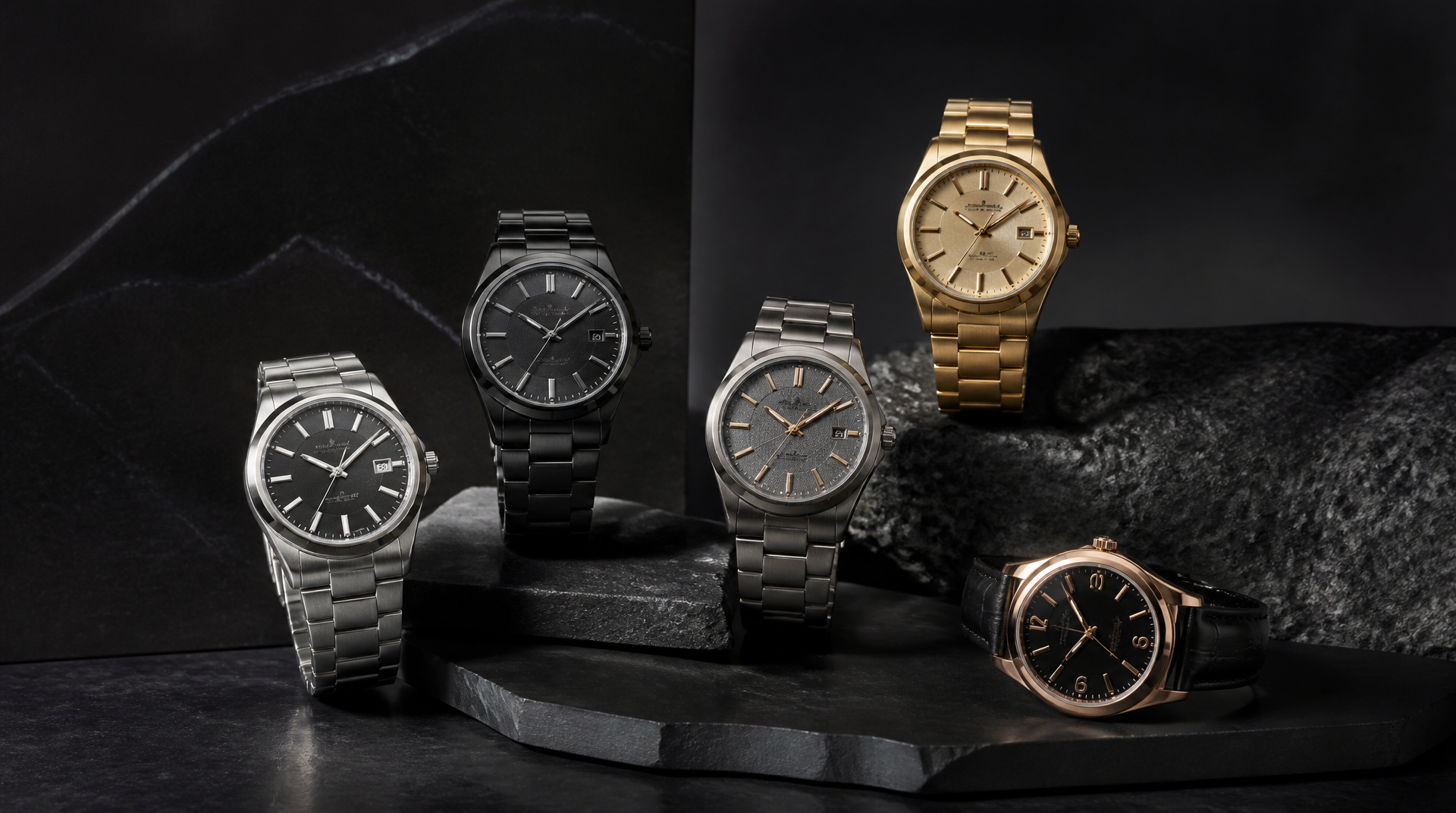
The watch case material that fits your daily life comes down to three filters: nickel allergy, weight tolerance, and the worst physical hit it will ever take. Use those filters first and you’ll eliminate at least half the options in under a minute. After that, a short sequence of steps confirms your final choice and short‑circuits the traps that trigger buyer’s remorse.
Three filters that eliminate half the materials in under a minute
Run these checks before you compare prices or lug shapes. They usually cross off two or three materials right away.
Filter 1: Do you have a nickel allergy?
Stainless steel contains nickel. If a belt buckle or earring ever gave you a rash, a steel watch case can do the same within hours. A confirmed nickel allergy immediately removes steel — regardless of price, brand, or finish. The safe alternatives become titanium, ceramic, platinum, niobium‑zirconium, forged carbon, and most aluminum‑bronze alloys. This single answer often solves the entire puzzle before you see a dollar figure.
Filter 2: What’s your all‑day weight ceiling?
Watch weight hits hardest after hour eight. A 150 g (5.3 oz) stainless diver feels radically different from a 90 g (3.2 oz) titanium field watch late in the day. Decide which band you fall into:
- Light (below 100 g / 3.5 oz): Titanium, niobium‑zirconium, forged carbon, small ceramic cases.
- Medium (100–150 g / 3.5–5.3 oz): Most steel watches, some bronze, full‑ceramic on a bracelet.
- Heavy (150 g + / 5.3 oz +): Full‑bracelet steel divers, 18k gold, platinum.
Filter 3: What’s the worst your watch will physically hit?
Match the material’s primary weakness to your worst‑case day, not your best‑case one.
- Scuffs and scrapes (desk, doorknobs, laptop): Stainless steel and titanium handle light contact without drama and can be refinished locally.
- Hard, sharp impacts (tools, rocks, accidental drops on tile): Ceramic is nearly scratch‑proof but brittle — it can fracture. Steel dents but doesn’t shatter. Titanium scratches more than steel but won’t crack.
- Exposure to saltwater, sweat, and chemicals: Titanium and ceramic are essentially immune. Steel resists well but needs occasional rinsing. Bronze corrodes on purpose, forming a patina you must want.
- You want it to look new for a decade: Ceramic and niobium‑zirconium hold their finish with almost no sign of wear. Steel and titanium show wear but can be refinished.
From filters to finalists: 3 ordered steps
Work the filters into these ordered steps. By the end you’ll have a short list of 1–3 materials that actually fit your life.
Step 1: Cross off materials based on allergy.
If nickel bothers you, steel is gone. Circle the hypoallergenic group from Filter 1. This often solves the whole puzzle before money enters the conversation.
Step 2: Align the damage profile with your worst‑case day.
From your remaining materials, pit each one’s weakness against the hardest day you’ll give it. If you drop a ceramic watch on a tile floor, the repair is a case replacement — not a refinish. If that risk makes you uneasy, steel or titanium are safer. If you prize a scratch‑free finish above all else and accept a small chance of a shatter, ceramic wins. Bronze is only for people who like a watch that visibly evolves.
Step 3: Confirm weight on a comparable bracelet or strap.
A 30 g (1 oz) difference can feel dramatic, especially on a steel bracelet. Visit a dealer and handle a titanium model next to a steel diver. If that’s not possible, check reviews that mention long‑wear comfort and note the head‑to‑bracelet weight balance. A lightweight case on a flimsy strap feels top‑heavy; a heavy case on a supple leather strap may still feel balanced.
Success check: You know you’re done when you can name one or two materials that clear the allergy filter, survive your worst‑case day, and sit within your weight tolerance. If you’re stuck between two, the next section gives you a realistic way to break the tie — and shows what can go wrong if you skip it.
Where buyers go wrong — and how to recover
Even after running the three steps, two owner patterns spoil the result. Recognize them early and your final pick settles in for years.
The titanium scratch trap
Symptom: You buy a titanium watch because it’s light and hypoallergenic. After a few weeks the brushed clasp and lugs show tiny hairline marks that look more pronounced than they ever did on your old steel watch. You try a polishing cloth, and now the finish is uneven and dull. Likely cause: Titanium is harder than most people expect, but its surface oxide layer picks up metallic transfers (from a laptop or zipper) that read as scratches.
More importantly, titanium can’t be spot‑polished the way 316L steel can without stripping the factory brushing entirely. Safer next move: Accept that titanium develops a soft‑grey patina over time rather than staying pristine; have a watchmaker re‑brush it professionally every two years if needed, and never use abrasive household cloths on it. If you can’t live with that evolving finish, pivot back to steel or move to ceramic for static appearance.
The ceramic fragility blind spot
Symptom: You choose a full‑ceramic chronograph because it’s “scratch‑proof.” A year in, you knock the case edge against a metal doorframe. The bezel doesn’t scratch — but a small chip appears at the edge. The manufacturer considers it impact damage, and the repair bill is several hundred dollars for a bezel replacement on a case that otherwise looks new. Cause: Ceramic is nearly scratch‑proof but brittle under concentrated edge impacts.
Many buyers interpret “scratch‑proof” as “indestructible,” handling the watch more casually than they would a steel diver. Safer next move: Reserve ceramic for wear patterns that avoid hard edge strikes (desk work, light activity) and factor in a realistic replacement‑cost buffer. If you’d rather dent a steel case and spend $100 refinishing it than face a $400 ceramic bezel replacement, steel is the more practical material.
A tie‑breaker branch when two materials feel equally right
If after step 3 you’re still torn — say between titanium’s lightness and ceramic’s permanent polish — stop testing random models. Instead, isolate the cost of a typical “worst day” repair under your own habits. For titanium, a deep case scratch can often be re‑brushed for under $100 at a competent watchmaker. For ceramic, a cracked case or chipped bezel is a parts‑replacement job that can easily exceed $300. If you’d rather pay a small refinishing bill annually than risk a single large bill on impact, titanium wins. If you’re willing to budget for that occasional larger repair and prize a finish that never clouds, ceramic stays.
When to escalate to a professional
- Skin reaction unknown: If you haven’t confirmed a nickel allergy through a dermatologist patch test, do not simply assume titanium is fine because the case is safe — the caseback, crown, or buckle may still contain nickel in other models. An actual test result removes all guesswork.
- Ceramic purchase over $4,000: Ask the dealer for the brand’s documented shock‑test standard and the exact cost to replace a case or bezel. If the dealer dodges the question or quotes a replacement cost above 30% of the watch price, that’s a red flag that your risk tolerance may be mismatched. At that point, steel or titanium becomes the safer stop.
- Heirlooms or precious‑metal cases above $10,000: Get a written estimate for a full case refinish from an authorized service center before you buy. Do not rely on forum anecdotes about “30 years of patina looks fine.” Knowing the actual dollar figure keeps the long‑term commitment grounded.
Material deep dive: what each case actually delivers
The table gives a fast side‑by‑side. Each material section then unpacks the numbers with real‑world examples and the one trade‑off you should never ignore.
| Material | Typical case weight (40–42 mm) | Scratch resistance | Hypoallergenic | Relative cost | Standout trait |
|---|---|---|---|---|---|
| Stainless steel (316L/904L) | 120–150 g (4.2–5.3 oz) | Moderate — can be refinished | No (contains nickel) | $–$$ | Restorable to like‑new finish affordably almost anywhere |
| Titanium (Grade 2/5) | 70–100 g (2.5–3.5 oz) | Moderate — scratches show; refinishing possible | Yes | $$–$$$ | Feather‑light, warm to skin, immune to corrosion |
| Ceramic (zirconium oxide) | 90–120 g (3.2–4.2 oz) | Very high — nearly scratch‑proof | Yes | $$–$$$$ | Color never fades; brittle under sharp edge impacts |
| 18k gold (yellow/rose) | 150–200 g+ (5.3–7.1 oz) | Low — soft, picks up micro‑scratches | Varies (alloy‑dependent) | $$$$ | Heirloom warmth and distinctive patina |
| Platinum | 200 g+ (7.1 oz+) | Low — dense, scratches | Yes | $$$$$ | Unmistakable weight with subdued matte luster |
| Bronze (aluminum‑bronze) | 100–140 g (3.5–4.9 oz) | Low — quickly forms surface patina | Often nickel‑free | $$–$$$ | A living finish unique to your environment |
| Niobium‑zirconium (Nb‑Zr) | ~70–90 g (2.5–3.2 oz) | High — similar to ceramic | Yes | $$$$ | Immune to temperature swings, shocks, and magnetic fields |
| Forged carbon composite | 50–80 g (1.8–2.8 oz) | High — hard to scratch | Yes | $$–$$$$ | Extreme lightness with a marbled, sporty look |
Stainless steel: the repairable benchmark
316L stainless steel remains the default for a hard reason: it’s corrosion‑resistant, widely serviceable, and cheap to refinish. Rolex’s 904L alloy takes a brighter polish and resists pitting slightly better, but both 904L and 316L can be made to look nearly new after years of desk‑diving marks. The Baltic Hermétique Tourer ($449) channels 1960s tool‑watch style in a clean 316L case — evidence that even an accessible steel watch can feel precise. If your use case doesn’t demand hypoallergenic material and you want a case that any competent watchmaker can restore, steel is the lowest‑friction choice.
Titanium: light, corrosion‑proof, quiet — and scratch‑sensitive
Titanium cuts weight by roughly 30–40% over steel of the same dimensions, won’t corrode in saltwater, and doesn’t steal heat from your wrist. The Grand Seiko SBGA211 “Snowflake” proves that a zaratsu‑polished titanium case can look crisp; the watch head sits at about 103 g (3.6 oz), soft enough to forget. The trade‑off: bare titanium shows fine scratches more visibly than steel and the oxide surface cannot be spot‑polished — a watchmaker must re‑brush the entire case or a component, a more involved job than a steel refinish. If steel triggers redness or feels too heavy, titanium is the logical step, but you must accept an evolving finish.
Ceramic: lifetime finish, not lifetime guarantee
Hardened zirconium oxide ceramic scores roughly 1,200 Vickers — a steel file won’t touch it. The color is baked through, so it never fades or oxidizes. Rado’s Captain Cook High‑Tech Ceramic series and IWC’s Top Gun chronographs exploit this to create cases that resist UV, saltwater, and daily knocks with zero visible aging. But the brittleness is real: a ceramic bezel insert can crack clean off after a 2‑foot drop onto tile, with a replacement cost near $500. Choose ceramic only if you want an unblemished appearance over a decade and can comfortably fund a replacement event. If the anxiety of that single shock outweighs the lustre, steel or titanium will let you breathe easier.
Gold and platinum: soft metals that age with character
18k gold cases are heavy, warm, and intentionally soft — they gather fine hairlines that collectively create a patina. The Rolex Day‑Date 40 in 18k yellow gold (roughly 210 g / 7.4 oz on a full bracelet) and the Grand Seiko SBGW257 in platinum use weight and luster to signal a different presence. Platinum is about 30 times rarer than gold and wears with a cool gray matte finish many collectors prefer for its understatement. These metals make sense when heirloom value and a specific aesthetic signal outweigh the higher cost and softer surface. Refinishing a gold or platinum case is expensive, so most owners let the patina build — it becomes part of the watch’s personality.
Bronze: a case that lives with you
Aluminum‑bronze alloys, used by Tudor, Oris, and Panerai, start bright and darken as the surface reacts with air, moisture, and skin. The Tudor Black Bay Bronze (43 mm, ~140 g / 4.9 oz) develops a stable brown‑green patina unique to the owner’s climate — a controlled transformation, not corrosion. Treated well, the patina protects the underlying metal. Avoid bronze if you want your watch to stay the same color it came in.
Niobium‑zirconium: the stability specialist
Ming’s 17.09 introduced a case alloy that stands out in a very specific way. Niobium‑zirconium’s blue‑gray finish doesn’t chip, fade, or corrode, and it’s exceptionally stable under temperature swings, physical shocks, and magnetic fields up to 1,000 gauss — a property that directly helps the movement remain accurate without a soft‑iron cage. It’s a material designed for precision first and appearance second. The trade‑off is limited availability and a higher price, but if magnetic shielding and thermal consistency matter to you, it’s a unique answer.
Forged carbon: the lightweight wildcard
Layers of carbon fiber sheet, compressed under heat and pressure with resin, create a random marbled surface that can weigh as little as 50 g (1.8 oz). TAG Heuer and Richard Mille both offer forged‑carbon models; the RM 11‑03 uses NTPT carbon for a distinct layered look with high scratch resistance. The only real negatives are that the busy surface isn’t for everyone and repair options remain limited — a damaged carbon case usually requires factory replacement.
Common watch case material questions, answered
Can a ceramic watch case crack from a normal drop?
Yes, a hard surface like tile can concentrate enough force on a ceramic edge to chip or crack it while leaving a steel case merely dented. Ceramic is extremely hard but brittle, so edge impacts are its weak point.
Is titanium really lighter than steel on the wrist, or is the difference exaggerated?
A titanium watch head typically weighs 30–40% less than an equivalent steel head, a gap that becomes unmistakable after eight hours of wear. On a bracelet the effect is even stronger, but a titanium case on a heavy steel bracelet can feel nearly as heavy — always check the full watch weight, not just the case material.
Does 904L steel hold up better than 316L over a decade?
904L resists pitting slightly better and takes a more brilliant polish, which buyers of luxury tool watches appreciate. For daily wear neither will fail, and both can be professionally refinished to look near‑new for the cost of a regular service.
Will a bronze watch stain my skin?
A bronze case that has formed a stable patina rarely discolors skin beyond an occasional faint‑green mark that washes off. If you have sensitive skin or sweat heavily, choose a model with a steel or titanium caseback so only the case edges contact your wrist.
The material that removes the most friction wins. Start with the allergy filter, lock in your weight limit, and match the weakness to the worst day you’ll give the watch. When you test your final two on the same strap style and know exactly what a repair costs, the choice holds up far better than any ranking chart.
Explore This Topic
- Back to General
- Back to Case Materials
Related guides in this cluster:
- Watch Size Guide: How to Choose the Right Case Diameter, Thickness & Fit
- Watch Lume Guide: Super-LumiNova vs Tritium vs Chromalight — Brightness Compared
- Why Your Automatic Watch Keeps Stopping: Complete Troubleshooting Guide

The We Know Watches editorial team brings together over 40 years of combined watch collecting, trading, and repair experience. Our editors have owned and handled watches from every major brand — from entry-level Seiko 5s to Rolex, Omega, Patek Philippe, and independent Swiss watchmakers. We’ve bought and sold at auction, worked with authorized dealers, visited manufacturing facilities in Switzerland and Japan, and serviced hundreds of movements ranging from the Seiko 7S26 to the Longines L888. Every guide and review we publish is based on hands-on experience, original research, and consultation with professional watchmakers. We do not accept payment for reviews, and we clearly disclose when we use affiliate links.