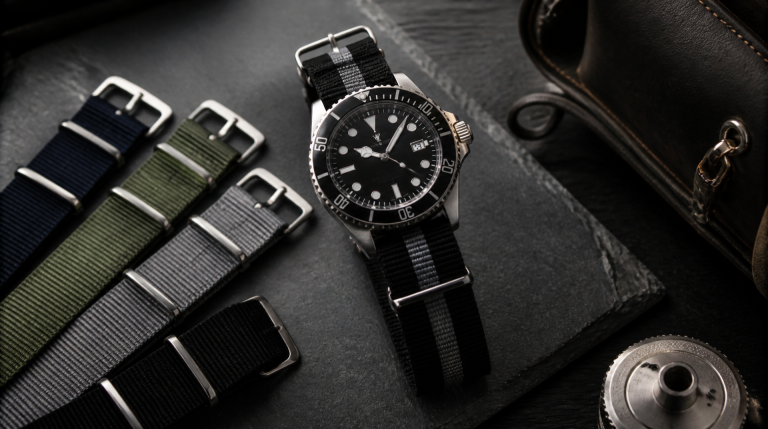
Replacing a Cartier watch strap typically costs $150–$600 for a genuine leather replacement from Cartier and $800–$2,000+ for a metal bracelet. Third-party alternatives run $20–$150, but the savings come with real trade-offs. Here’s what each option actually delivers and where most buyers get stuck.
What You’ll Pay for Leather vs. Metal Straps
Total cost depends on whether you buy genuine or third-party, the material, and who installs it. The table below covers the most common scenarios for Cartier Tank, Santos, Ronde, and Drive models.
| Option | Typical Price (USD) | What’s Included | Installation |
|---|---|---|---|
| Genuine Cartier leather strap (calfskin or alligator) | $150–$600 | Brand-matched strap with curved ends for Tank/Ronde; buckle if needed | Cartier boutique or authorized service center (usually free with purchase) |
| Genuine Cartier metal bracelet | $800–$2,000+ | Full link bracelet with correct end links and folding clasp | Cartier service center only (requires ordering by reference number) |
| Third-party leather strap (e.g., vinacreations 20mm Vintage Black Leather Watch Band) | $20–$80 | Standard straight-end strap; often includes quick-release spring bars | DIY or any watch repair shop |
| Third-party metal bracelet | $50–$300 | Aftermarket solid-link bracelet; may not match Cartier’s end-link shape | DIY or jeweler |
Genuine prices vary by model. A Tank Louis Cartier alligator strap runs toward the top of that range, while a Tank Solo calfskin strap lands near the bottom. Metal bracelets cost most on models with integrated designs (Pasha, some Santos) where only Cartier can supply the exact end links.
Genuine Cartier or Third-Party: How to Decide
When to stick with genuine
- Your watch has curved lugs (Tank, Ronde, Baignoire). Third-party straps are straight-ended and leave visible gaps on both sides.
- You want to reuse the original Cartier buckle or deployant clasp. Genuine straps match the exact thickness and hole spacing for those parts.
- Resale value matters. A full Cartier service history with original parts holds value better than a mix of aftermarket components.
When third-party works fine
- Your Cartier has straight lugs – some Santos models (e.g., Santos Galbee 2961) and the Drive de Cartier accept standard 20mm or 22mm straps. A strap like the vinacreations 20mm Vintage Tan Brown Leather Watch Band fits without modification.
- You want a color or material Cartier doesn’t offer (blue leather, suede, quick-release options).
- Your budget doesn’t allow the boutique price and you’re comfortable swapping straps yourself.
One hard rule for metal: Never buy a third-party metal bracelet for a Cartier that originally came on a bracelet. Aftermarket bracelets almost never match the exact finish, end-link curvature, or clasp feel. The result is a loose fit, sharp edges that scratch the case, or both. For metal, save for the genuine part.
The Mistake That Derails Most DIY Strap Replacements
The single biggest failure point is ordering the wrong lug width – and guessing instead of measuring. Cartier uses at least six different lug widths across its lineup: 16mm, 18mm, 19mm, 20mm, 22mm, and 24mm. A strap that’s 1mm off won’t sit flush and can damage the spring bar channels over time.
How to catch this before you buy
Measure the inside gap between the lugs using a digital caliper, not the old strap. A worn leather strap has stretched or compressed and will give a false reading. For a quick cross-check, look up your model’s lug width on Cartier’s official website or a reputable database like WatchBase. Enter your Cartier’s case reference number (found on the case back) to confirm the correct width before ordering.
- For curved-lug models (Tank, Ronde), a straight-ended third-party strap leaves a 1–3mm gap on each side. That gap collects lint and causes the strap to twist when you move your wrist.
- If your Cartier uses a deployant clasp, check the new strap’s thickness against the clasp slot. Most third-party straps are 2.5–3.5mm thick. Too thick and the clasp won’t close; too thin and the watch flops around.
If you already bought a strap with the wrong width, don’t force it – you’ll damage the spring bar holes. Return it and order the correct size.
Replacing a Cartier Strap at Home (Straight-Lug Models Only)
This process is safe only if your Cartier has straight lugs and you’ve confirmed the correct width. For curved-lug models like the Tank, take it to a professional.
Tools you’ll need
- Spring bar tool (forked end preferred)
- Soft cloth or watch cushion
- Magnifying loupe (helpful for Cartier’s small spring bars)
- New strap with spring bars (third-party straps usually include them)
Step-by-step
1. Set up a clean work surface. Place the watch face-down on a soft cloth so the lugs are accessible.
2. Remove the old strap. Insert the forked end of the spring bar tool between the strap and the lug. Compress one spring bar while gently prying it out of the hole. Repeat on the opposite side. Do not twist the tool – that scratches the inside of the lugs.
3. Check the spring bars. Cartier uses shouldered spring bars on metal bracelets and standard straight spring bars on leather. If you’re switching from metal to leather, you likely need new standard spring bars (1.5mm diameter, length matching your lug width).
4. Install the new strap. Press one spring bar tip into the lug hole. Compress the other end with your tool and guide it into the opposite hole. You should hear or feel it click into place.
5. Perform the tug test. Gently pull the strap away from the case. If it slides out, the spring bar didn’t seat – remove and redo. If it holds firm, you’re good.
Quick checkpoints during the process
- Before step 4: Verify the spring bar length matches your lug width exactly. Cartier’s lugs are tight – even 0.5mm of slop causes rattling.
- After step 5: The watch should sit flat on the table without the strap tilting. There should be no visible gap between strap and case.
When to stop and see a pro
- The spring bar won’t click in on either side – you likely have the wrong bar length.
- The third-party strap has sharp metal edges that could scratch the case during installation.
- The strap contacts the case when you bend your wrist (a sign that a curved-lug model needs a genuine curved strap).
A successful replacement means the strap is secure, the watch sits straight, and the spring bars are fully engaged in the lug holes. If anything feels loose or misaligned, back up and check your parts.
FAQ
Can I buy a genuine Cartier strap online from anyone other than Cartier?
No. Genuine Cartier straps are sold only through Cartier boutiques and the official Cartier website. Third-party sellers claiming to sell “genuine Cartier” straps are almost always selling counterfeits.
Does Cartier charge for installation when I buy a strap from them?
Most boutiques include free installation with the purchase of a strap. Labor is typically built into the strap price.
Will using a third-party strap void my Cartier warranty?
No, but damage you cause during a DIY swap – scratched case, damaged spring bar holes – is not covered. Cartier service centers may also ask you to remove a non-genuine strap before they’ll work on the watch.
How often should I replace a Cartier leather strap?
Every 12–18 months with regular daily wear. Metal bracelets last decades with occasional link-pin tightening or spring bar replacement.

The We Know Watches editorial team brings together over 40 years of combined watch collecting, trading, and repair experience. Our editors have owned and handled watches from every major brand — from entry-level Seiko 5s to Rolex, Omega, Patek Philippe, and independent Swiss watchmakers. We’ve bought and sold at auction, worked with authorized dealers, visited manufacturing facilities in Switzerland and Japan, and serviced hundreds of movements ranging from the Seiko 7S26 to the Longines L888. Every guide and review we publish is based on hands-on experience, original research, and consultation with professional watchmakers. We do not accept payment for reviews, and we clearly disclose when we use affiliate links.