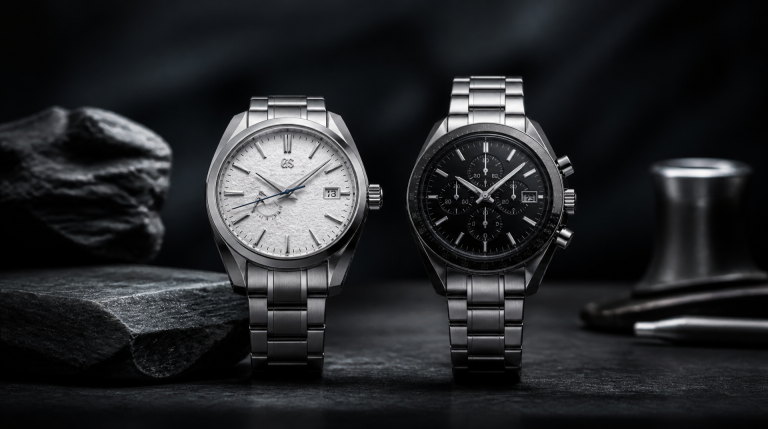
The Longines Master Collection wins if you prioritize a thinner case, a superior 72-hour movement, and a display caseback that shows the caliber. The Tudor 1926 wins if you need 100m water resistance, a bracelet option from the factory, and the brand cachet of a Rolex sibling. The most common mistake buyers make: choosing the Tudor expecting a slim dress watch, then discovering its 10.5mm thickness fights with fitted shirt cuffs. The Longines at roughly 9.4mm slides cleanly under any cuff.
Quick answer
Choose the Longines Master Collection if you wear dress shirts five days a week and want a watch that disappears under a cuff with a movement that runs through the weekend. Choose the Tudor 1926 if you need one watch that can handle swimming, travel, and formal occasions without switching straps. The Longines delivers better movement specs and a thinner case. The Tudor delivers better water resistance and a factory bracelet option.
Comparison framework
| Feature | Longines Master Collection | Tudor 1926 |
|---|---|---|
| Case diameter | 40mm (42mm in some refs) | 39mm, 41mm |
| Thickness | ~9.4mm | ~10.5mm |
| Movement | L888.5 (72-hour power reserve, 25,200 vph, silicon balance spring on newer refs) | T601 (38-hour power reserve, ETA 2824-2 base) |
| Water resistance | 30m (splash only) | 100m (swim-safe) |
| Crystal | Sapphire with double-sided AR coating | Sapphire with single-sided AR coating |
| Caseback | Exhibition (display) | Solid steel with Tudor rose engraving |
| Strap options | Alligator leather (buckle) | Leather or five-link steel bracelet (deployant clasp) |
| Price (approx) | $2,100–$2,600 | $2,400–$3,100 |
| Warranty | 2 years (5 years with registration) | 5 years |
Where the Longines pulls ahead
The L888.5 caliber is the strongest movement in this comparison. It runs at 25,200 vph with 21 jewels and delivers a genuine 72-hour power reserve. Set it down Friday evening, and it is still running Monday morning. The Tudor T601, based on a stock ETA 2824-2, gives you 38 hours. Miss a day of wear over the weekend, and you are resetting the time and date Monday morning.
Thickness matters more here than most buyers expect. The Longines measures roughly 9.4mm, the Tudor 10.5mm. That 1.1mm difference is the difference between a watch that disappears under a dress cuff and one that bulges the fabric. If you wear tailored shirts with snug cuffs, test this before buying.
The exhibition caseback is standard on the Longines. You see the blue screws, Geneva stripes, and the oscillating weight. The Tudor uses a solid steel caseback with an engraved rose. Neither movement is heavily decorated, but the Longines at least lets you see what is inside. The Tudor hides an ETA movement that you would find in watches costing a fraction of the price.
Where the Tudor answers back
Water resistance is the Tudor’s clearest advantage. At 100m, the 1926 handles swimming, rain, and hand washing without a second thought. The Longines Master Collection is rated to 30m — fine for a desk and dinner, but submerging it invites moisture damage. If this watch will ever get wet beyond a splash from hand washing, the Tudor is the safer choice.
The Tudor also offers a factory bracelet. The five-link steel bracelet integrates cleanly into the case and raises the perceived quality of the whole package. The Longines ships on alligator leather. Buying the Longines bracelet separately adds roughly $400–$600 depending on the reference, and it is not always easy to find. If you want a metal bracelet from day one, the Tudor costs less to get there.
Brand perception splits buyers into two camps. Tudor rides the Rolex association: same Le Locle factory, same QC standards, a five-year warranty. Longines sits in the Swatch Group’s heritage tier — less tool-watch DNA, more mid-century elegance. In the general public, Tudor carries more recognition. Among collectors, Longines holds its own for dress-watch purity.
One failure mode to spot early
The most common mistake: choosing the Tudor 1926 expecting a slim dress watch that slips under a French cuff, then discovering it does not fit under the shirt you plan to wear it with.
The 10.5mm thickness and the flat case profile create a solid block on the wrist. Under a tailored dress shirt with snug cuffs, the Tudor catches and bulges the fabric. The Longines at 9.4mm does not.
Verification step: Take a watch you already own that measures at least 10mm thick. Wear it under the dress shirt you would use for formal events. If the fabric catches or bulges noticeably, the Tudor 1926 will do the same. If that 10mm watch slides under cleanly, the Tudor may work for you in the 39mm size. The Longines will work regardless.
Conversely, if you never wear French cuffs and the watch will live under a jacket or casual sleeve, the Tudor’s height becomes irrelevant. The failure mode only appears if you actually need a true cuff-friendly dress watch.
Best-fit picks by use case
You wear suits or dress shirts five days a week: Longines Master Collection. The 9.4mm case and 72-hour reserve let you wear it Monday through Friday without winding. It disappears under a cuff and looks correct at the office or a formal dinner.
You want one watch for everything: Tudor 1926 on bracelet. The 100m water resistance and steel bracelet let it handle travel, weekends, and light activity without concern. You lose the display caseback, but you gain actual daily versatility. The 41mm version works better as a do-everything watch; the 39mm leans dressier.
Brand recognition matters for a first luxury watch: Tudor. The Rolex connection gives it stronger resale value and wider name recognition. The Longines is better known inside enthusiast circles than by the general public.
Movement specs drive your decision: Longines. The L888.5 is objectively better in power reserve and beat rate consistency. You get 72 hours versus 38, and you can see the movement work.
You alternate watches and this is a rotation piece: Longines Master Collection. The thinner case and leather strap make it a natural dress-watch addition. The Tudor 1926 competes more with sport watches in a rotation.
Trade-offs to know
The Longines L888.5 is a modified ETA A31.L01. The modifications — a larger barrel for extended power reserve, a silicon balance spring on newer references — mean service costs run slightly higher than a standard ETA 2824. Not every independent watchmaker will have the parts or experience with the L888. The Tudor T601 is a stock ETA 2824-2. Any watchmaker can service it, and parts are widely available.
The Tudor 1926 on bracelet uses a push-button deployant clasp with no micro-adjustment. If your wrist swells in heat, you cannot fine-tune the fit without a tool. The Longines leather strap with a traditional buckle adjusts more easily on the fly. If you live in a climate with significant seasonal temperature swings, the lack of micro-adjust on the Tudor can become a daily annoyance.
Both watches use scratch-resistant sapphire crystal. The Longines applies anti-reflective coating on both sides of the crystal. The Tudor coats only the underside. In direct light, the Tudor dial can produce more glare, making the time harder to read at a glance. This is a small detail, but it matters if you are frequently outdoors or in bright offices.
Resale value: the Tudor 1926 typically holds 60–70% of retail after three years. The Longines Master Collection resells at roughly 50–60% depending on condition and dial color. Neither is an investment, but the Tudor retains more value if you plan to sell later.
Related questions
Can the Tudor 1926 be worn as a dress watch? Yes, with the 39mm opaline or black dial with Roman numerals. The 41mm at 10.5mm thick may sit too high under a tailored cuff. Stick to the smaller size for formal wear.
Does the Longines Master Collection have a true in-house movement? No. The L888.5 is based on the ETA A31.L01 architecture with proprietary Longines modifications. It is not entirely in-house, but it is used exclusively by Longines within the Swatch Group.

The We Know Watches editorial team brings together over 40 years of combined watch collecting, trading, and repair experience. Our editors have owned and handled watches from every major brand — from entry-level Seiko 5s to Rolex, Omega, Patek Philippe, and independent Swiss watchmakers. We’ve bought and sold at auction, worked with authorized dealers, visited manufacturing facilities in Switzerland and Japan, and serviced hundreds of movements ranging from the Seiko 7S26 to the Longines L888. Every guide and review we publish is based on hands-on experience, original research, and consultation with professional watchmakers. We do not accept payment for reviews, and we clearly disclose when we use affiliate links.