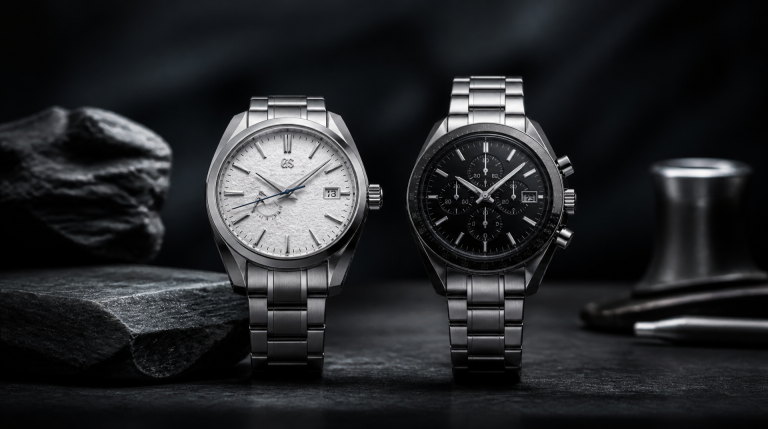
Both the Tissot Le Locle and Hamilton Jazzmaster deliver Swiss automatic dress watches under $750, but they serve different owners. The Le Locle is a traditional formal piece (39.3 mm, Roman numerals, guilloché dial) that works best for occasional wear under a cuff. The Jazzmaster is a larger, more versatile daily‑wear watch (40 or 42 mm, 50 m water resistance, metal escapement) that bridges dress and casual settings. If you need one watch for suit‑and‑tie events only, buy the Le Locle. If you want a watch you can wear to the office and keep on during light rain or hand‑washing, buy the Jazzmaster.
Comparison framework
| Feature | Tissot Le Locle | Hamilton Jazzmaster |
|---|---|---|
| Case diameter | 39.3 mm | 40 mm / 42 mm |
| Thickness | ~9.75 mm | ~11.2 mm (40 mm) / ~11.5 mm (42 mm) |
| Lug‑to‑lug | ~45 mm | ~48 mm (40 mm) / ~50 mm (42 mm) |
| Lug width | 19 mm | 20 mm (40 mm) / 22 mm (42 mm) |
| Movement | Powermatic 80 (plastic escapement, 80‑hour reserve) | H-10 (metal escapement, 80‑hour reserve) |
| Water resistance | 30 m (splash‑proof only) | 50 m (shower‑safe, light swimming) |
| Dial | Roman numerals, guilloché center, date at 3 | Stick or Roman markers, slim minute track, date window |
| Crystal | Sapphire, domed | Sapphire, domed |
| Strap/bracelet | Leather (19 mm); few references with five‑link bracelet | Leather or Oyster‑style bracelet (20/22 mm, varies by reference) |
| Price range (new) | $525–$675 | $525–$745 |
Best-fit picks by use case
For a dedicated dress watch (occasional formal wear)
The Tissot Le Locle is the safer choice for weddings, galas, or any event where the watch should not compete with the outfit. Its 39.3 mm case and thin profile slip easily under a French cuff, and the guilloché dial provides enough visual interest without being flashy. The 30 m water resistance means you must remove it before washing hands or stepping into rain. For owners who wear a dress watch only a few times a month, the plastic escapement in the Powermatic 80 is less of a concern because the watch will be serviced less frequently and the degradation risk from humidity is lower.
For a daily wear watch that can handle light water exposure
The Hamilton Jazzmaster (40 mm) works for a wider range of situations. The 50 m water resistance allows you to keep it on while washing hands, walking in rain, or even taking a quick shower. The H-10 movement’s metal escapement is more robust over years of daily use without regular servicing. If you often wear short sleeves or push your watch up your forearm, the larger presence of the 40 mm case (48 mm lug‑to‑lug) looks better proportioned on wrists 6.5 to 7.5 inches. The 20 mm lug width also means you can swap in a wide array of aftermarket straps, from nylon NATOs to textured leather, without hunting for uncommon sizes.
For wrists under 6.5 inches (smaller wrists)
The Le Locle (39.3 mm, 45 mm lug‑to‑lug) fits these wrists without overhang. The Jazzmaster’s 40 mm version can work but will show more lugs; the 42 mm version often looks oversized. To verify fit before buying: wrap a tape measure or piece of string around your wrist at the point where the watch sits, then measure the string flat. If the result is 6.5 inches or less, lean toward the Le Locle.
For buyers who prefer a metal bracelet
The Jazzmaster is available on an Oyster‑style bracelet from many references (e.g., H38425721, H38525721); the Le Locle is primarily sold on leather with a deployment clasp, though a few references include a five‑link bracelet. Check the exact model number before ordering. If you intend to wear the watch on a bracelet every day, the Jazzmaster gives you more factory options and a more secure clasp feel.
Trade-offs to know
Plastic vs. metal escapement durability – This is the most impactful hidden difference. The Tissot Powermatic 80 uses a synthetic plastic escape wheel and pallet fork that can degrade over 5–7 years in humid or dusty environments. The Hamilton H-10 uses all‑metal parts. To detect early trouble on any Powermatic 80 watch: manually wind it and listen for a faint grinding or scraping sound. Alternatively, note the power reserve after a full wind—if it drops noticeably below 80 hours before it stops, the movement is losing amplitude and needs service soon.
If you plan to wear the watch daily for more than four years without servicing, the Jazzmaster’s metal escapement is the lower‑risk pick. Service costs for the Powermatic 80 can also run higher because the plastic parts often need full replacement rather than simple cleaning.
Water resistance and daily risk – 30 m on the Le Locle means “splash‑proof” and not much else. A brief rain shower or accidental splash is okay, but submerging the watch or running it under a faucet can push water past the crown seal. The Jazzmaster’s 50 m is enough for hand‑washing, rain, and even light swimming (avoid diving or high‑pressure water). If you live in a wet climate, shower with your watch on, or do dishes while wearing it, the Jazzmaster is the only safe option.
Strap availability and aftermarket flexibility – The Le Locle uses a 19 mm lug width, which limits aftermarket strap choices. The Jazzmaster uses 20 mm (40 mm case) or 22 mm (42 mm case), both common sizes. If you like swapping straps, the Jazzmaster is easier to source matching leather, NATO, or fabric options. Many online strap makers offer 20 mm and 22 mm in dozens of colors and materials; 19 mm selections are narrower and often more expensive.
Case back and service visibility – Both watches typically have a display case back. On the Le Locle you can see the Powermatic 80 with its signature open‑work rotor and—if you look carefully—the plastic escape wheel near the balance. On the Jazzmaster you can see the H-10 with its metal escapement, often finished with perlage and blued screws. Neither movement is heavily decorated, but the visual difference confirms what’s inside. If you enjoy observing the movement through the case back, the Jazzmaster’s all‑metal assembly has a more traditional finished look.
Related questions
Are the movements interchangeable?
No. Both are based on ETA’s C07 family, but the escapement materials differ. Parts are not compatible between the Powermatic 80 and the H-10.
Which watch holds its value better?
Neither holds value strongly. Pre‑owned prices for both settle around 50–60% of retail after a few years, depending on condition and completeness. The Jazzmaster sometimes sells faster on the secondary market because of its broader appeal, but the difference is small.
Do both have sapphire crystals?
Yes. Both use domed sapphire with anti‑reflective coating on the inside. The Le Locle’s crystal is more highly domed, creating a vintage bubble effect that can cause slight distortion at certain angles.
Can I wear either watch with a tuxedo?
The Le Locle is the more traditional choice: smaller case, Roman numerals, and thinner profile. The Jazzmaster 40 mm with a plain black dial and stick markers can also work, but the larger diameter may look less formal under a stiff shirt cuff.
Which one should I buy if I need a bracelet?
Check the specific reference. The Jazzmaster is widely available on a bracelet (e.g., H38425721, H38525721). The Le Locle bracelet models (e.g., T006.407.22.038.00) exist but are harder to find new. If you know you want a bracelet, start your search with the Jazzmaster.

The We Know Watches editorial team brings together over 40 years of combined watch collecting, trading, and repair experience. Our editors have owned and handled watches from every major brand — from entry-level Seiko 5s to Rolex, Omega, Patek Philippe, and independent Swiss watchmakers. We’ve bought and sold at auction, worked with authorized dealers, visited manufacturing facilities in Switzerland and Japan, and serviced hundreds of movements ranging from the Seiko 7S26 to the Longines L888. Every guide and review we publish is based on hands-on experience, original research, and consultation with professional watchmakers. We do not accept payment for reviews, and we clearly disclose when we use affiliate links.